• Facebook
  • Instagram
  • LinkedIn
  • Youtube
  • Twitter
  • WhatsApp
  • Mail
            CONTACTA CON BHITAL Whatsapp  +34 669 979 939 | Email: info@bhital.com
  • 0Carrito de Compra
Bhital
  • HOME
  • CONSULTA DE LONGEVIDAD
    • CONSULTA DE LONGEVIDAD
    • PRUEBAS Y TESTS DE LONGEVIDAD
      • Tests Genéticos
        • TIPOS DE TESTS GENÉTICOS
        • FARMACOGENÉTICA
      • Estudio Cardiometabólico
      • Metabolismo Basal por Calorimetría Indirecta
      • Estudio mitocondrial, estrés oxidativo, inflamación y sueño
      • Mineralograma
      • Pruebas digestivas
      • Histaminosis
    • MEDICINA DE REJUVENECIMIENTO Y LONGEVIDAD
    • APOYO EMOCIONAL
    • REPROGRAMACIÓN DEL SUBCONSCIENTE
    • ASESORAMIENTO MÉDICO EN SALUD AMBIENTAL
    • VIDEO DE ACCESO A VIDEOLLAMADAS
    • VIDEO RECORDATORIO CITA
  • DRA. CARMEN ROMERO
  • LA ESPIRAL DE BHITAL
  • LIBRO
  • CONFERENCIAS
  • TESTIMONIOS
  • BLOG
  • VÍDEOS
  • MEDIOS
    • RADIO
    • PRENSA
    • TELEVISIÓN
  • AUTOTESTS
    • CALCULADORA DE LIPEDEMA
    • TEST SINDROME OVARIO POLIQUÍSTICO
    • AUTOANÁLISIS DE OMEGA 3
    • CALCULA TU EDAD BIOLOGICA
    • EVALUA TU VITALIDAD
    • REVISA TU MEMORIA ONLINE
    • TEST DE CALIDAD DE SUEÑO
    • TEST DE ELECTROHIPERSENSIBILIDAD
  • COMPRA SALUD
  • CONTACTO
  • Español
  • Menú Menú

Pharmacogenetics: medicines according to your genetics

25/10/2024/en News from our Blog/por Dra. Carmen Romero

Pharmacogenetics: medicines according to your genetic

Precision medicine and lifestyle: an integrative approach

Pharmacogenetics: medicines according to your genetics is an innovative approach that puts personalised health within reach of every individual. In precision and lifestyle medicine, the aim is not to exclude medicines, but to integrate them into a holistic approach that, through healthy habits, allows in many cases to reduce their use or even make them unnecessary. Through nutrition, physical activity, stress management and rest, among others, many patients can achieve optimal health without relying solely on drugs. However, when the use of drugs is necessary, pharmacogenetics can personalise their doses and avoid side effects by tailoring them to the genetics of each patient.

How does pharmacogenetic influence treatments?

Pharmacogenetic studies how genetic variations affect an individual’s response to medicines. Although we all share more than 99.9% of our DNA, these small variations can determine whether a drug is effective, whether its dosage needs to be adjusted or whether it may produce adverse effects. Pharmacogenetics: medicines according to your genetics becomes a key concept in understanding how medical treatments can be adjusted to maximise their benefits for each individual patient.

pharmacogenetic

Pharmacogenetic

Metaboliser types: a key to pharmacogenetic

One of the greatest advantages of pharmacogenetic is that it allows us to know what type of metaboliser we are. This classification helps us to understand why some people respond well to certain drugs, while others experience side effects or do not get the relief they expect. The types of metabolisers, according to pharmacogenetic, are:

  1. Poor metabolisers: they process medicines slowly, which can lead to accumulation in the body and increase the risk of toxicity.
  2. Intermediate metabolisers: have slightly slower enzyme activity, which may require adjustment of the drug dose.
  3. Normal metabolisers: process drugs at an average rate and usually obtain the appropriate therapeutic effect without adjustment.
  4. Ultra-rapid metabolisers: these eliminate medicines too quickly, which can reduce their effectiveness and, in some cases, require an increase in dosage.

Example of a pharmacogenetic test

Pharmacogenetic: medicines according to your genetic allows doctors to adjust medication and doses precisely according to the type of metaboliser, minimising risks and maximising benefits.

Pharmacogenetic

One-size-fits-all medicines: the challenge of the same dose for everyone

Traditionally, medicines have been prescribed on a ‘one-size-fits-all’ model. This standard approach ignores genetic differences in individuals, which carries two major risks:

  1. Overdosage: In slow metabolisers, the drug may accumulate, increasing the risk of serious side effects.
  2. Lack of therapeutic effect: in rapid metabolisers, the drug may not reach the required concentration in the body, reducing its efficacy.

With pharmacogenetics: medicines according to your genetics, it is possible to personalise treatments to avoid these problems and adjust medicines according to each patient’s unique biology.

Genes influencing pharmacogenetic

The response to certain drugs is influenced by specific genes that affect their metabolisation. Some of the most important genes in pharmacogenetics include:

  • CYP2D6 y CYP2C19: affect the response to antidepressants, antipsychotics and analgesics. Thanks to pharmacogenetic, the dosage can be adjusted by choosing an alternative drug.
  • SLCO1B1: determines the transport of statins, used to lower cholesterol. Some people with variants in this gene are at increased risk of muscle side effects.

Pharmacogenetic: medicines according to your genetic optimises the selection of medicines and avoids adverse reactions thanks to the knowledge of the patient’s genetic profile.

Personalised medication: tailoring treatment to your genetics

In contrast to the ‘one-size-fits-all’ model, pharmacogenetic proposes a personalised medication approach that improves the safety and efficacy of treatments:

  1. Increased safety: side effects are minimised by tailoring medication to the genetics of each patient, avoiding hospitalisations.
  2. Optimised efficacy: medicines are adapted to the individual’s metabolism, improving their results.
  3. Reduced testing and errors: pharmacogenetic saves time and resources by selecting the most appropriate treatments from the outset.

Conclusion: towards truly personalised medicine

Pharmacogenetic: medicines according to your genetic represents a fundamental advance in personalised medicine. This approach allows treatments to be tailored to individual needs, reducing risks and improving outcomes. With the integration of pharmacogenetic, medicine is moving towards tailor-made solutions, adapted to the genetic profile and lifestyle of each patient.

Would you like to know how pharmacogenetic can optimise your treatment? At Bhital.com, we are here to help you discover the benefits of precision medicine and healthy lifestyle. Book your appointment or send us a WhatsAppal 669 979 939 and transform your health with a tailored approach.

https://bhital.com/wp-content/uploads/2022/05/farmacogenetica-300x200px.jpg 200 300 Dra. Carmen Romero https://bhital.com/wp-content/uploads/2026/02/Logo-Web-Menu-271X300.png Dra. Carmen Romero2024-10-25 18:59:592025-04-21 11:37:31Pharmacogenetics: medicines according to your genetics

Dental health: key to overall health and longevity

25/10/2024/en News from our Blog/por Dra. Carmen Romero

Dental health: key to overall health and longevity

Why is dental health key to overall health and longevity?

Dental health is fundamental to maintaining overall health and achieving greater longevity. Taking care of your teeth and gums not only improves aesthetics and emotional well-being, but also prevents serious systemic diseases such as heart disease, diabetes and chronic inflammatory conditions. Maintaining good oral hygiene is key to reducing inflammation, which is closely linked to accelerated ageing. In addition, the image we project is directly influenced by the state of our mouth. A healthy smile not only improves self-confidence, but also has a positive impact on how others perceive us, which can influence our social and professional life.

Dental health: key to overall health and longevity

Dental health: key to overall health and longevity

Dental health: How to care for your teeth and gums for a longer, healthier life

To maintain overall health and prolong your longevity, it is essential to prioritise the care of your mouth. Here are some key steps to keep your dental health in top condition:

Regular dental evaluations

Regular dental visits are crucial to detect problems early and avoid complications. Make sure your dentist checks for important indicators, such as:

  • Loss of tooth attachment.
  • Depth of periodontal pockets.
  • Plaque index.

These check-ups allow you to identify potential problems before they become serious, helping to maintain the health of your gums and teeth.

Daily oral hygiene routine

Implementing a daily oral hygiene routine is essential to preserve dental health:

  • Oral irrigator: Helps remove food debris and bacteria from hard-to-reach areas.
  • Dental floss: Removes plaque and food debris between the teeth, reducing the risk of caries and periodontal disease.
  • Brushing: Brush your teeth after every meal and at least twice a day with a soft-bristled toothbrush.
  • Tongue cleaner: Cleaning the tongue reduces bacteria, improving oral hygiene and helping to prevent bad breath.
  • Coconut oil mouthwash: Using extra virgin coconut oil is a natural option with antibacterial properties. Oil pulling, an Ayurvedic technique that consists of holding the oil in the mouth for 10-20 minutes, helps eliminate toxins and bacteria, promoting deep cleaning and protecting the gums.

Dental health: key to overall health and longevity


Healthy diet: the perfect ally for good dental health

In addition to good oral hygiene, diet plays a key role in dental health and overall health. Reducing sugar consumption is key to preventing tooth decay and gum disease. Opt for healthy alternatives such as fresh fruits, nuts, raw vegetables and fibre-rich foods. These foods not only promote better digestion, but also help keep teeth strong and healthy by stimulating saliva production, which is crucial for remineralisation of tooth enamel. In addition, staying hydrated is essential. Saliva is the body’s natural tool for neutralising acids and washing away food particles, which helps protect tooth enamel. Drinking enough water throughout the day also helps prevent dry mouth, which can increase the risk of tooth decay and periodontal disease. Thus, a proper diet is a cornerstone of dental health.

Dental alignment: an essential factor for optimal dental health

Good dental alignment not only improves aesthetics, but also facilitates better cleaning. Aligned teeth allow for more effective plaque removal, reducing the risk of caries and periodontal problems. In addition, a correct occlusion (how the upper and lower teeth fit together) prevents overloading of some teeth and muscular problems in the jaw. Correcting dental alignment, whether through orthodontics or other treatments, not only improves aesthetics, but also contributes to a longer and healthier life, as it allows for better chewing, reduces the risk of caries and periodontal disease, and prevents overloading of the facial musculature and teeth.

Biological and integrative approach to dental health: the importance of neural therapy

Biological or integrative dentistry considers the relationship between the teeth, the body and the nervous system, applying complementary therapies such as neural therapy. This technique uses procaine injections at key points, such as the teeth or nearby areas, to restore nervous system communication and alleviate problems related to dental health.


In addition, mineralograms are recommended to analyse the levels of minerals and heavy metals in the body. This analysis can be useful to identify imbalances or poisoning, which could be related to dental materials such as amalgams, and guide possible chelation treatment to remove toxic metals.

Dental amalgam replacement with the SMART protocol

If you have mercury amalgam fillings, it is essential to consider their safe replacement, as mercury is a toxic metal that can be released in small amounts during its lifetime. To ensure safe removal, it is recommended to use the SMART Protocol (Safe Mercury Amalgam Removal Technique), developed by the International Academy of Oral Medicine and Toxicology (IAOMT). This protocol includes protective measures for both the patient and dental staff, such as the use of rubber barriers, air suction, oxygen for the patient and rinses with activated charcoal or chlorella to reduce mercury exposure during the procedure.

The impact of bruxomania and stress management on dental health

Bruxism or teeth grinding, usually caused by stress, can lead to severe tooth wear. Addressing this problem with dentist-recommended devices is crucial. In addition, managing stress with relaxation techniques such as meditation or yoga is key to preventing dental damage and improving overall wellbeing.

Applied kinesiology in dentistry: Personalised evaluation of materials and treatments

Kinesiology applied in dentistry makes it possible to evaluate how different dental materials affect the patient’s overall health. Through muscle tests, the most biocompatible materials are selected, avoiding adverse reactions. It also helps to identify the most appropriate treatment to ensure oral health and overall body balance.

Use of biocompatible materials and essential oils in neurofocal dentistry

Neurofocal dentistry focuses on avoiding the use of toxic materials that interfere with overall health. It recommends the use of biocompatible and natural alternatives, such as essential oils (lavender, chamomile, clove), which have proven to be effective in reducing inflammation and preventing gum infections.

Homeopathy in dentistry

Homeopathy is an integrative tool that complements dental treatments to improve recovery. Arnica montana reduces pain and inflammation after surgery, while Gelsemium and Aconitum relieve anxiety before procedures. Calendula is also used to accelerate the healing of canker sores and mouth sores.

Gut health starts in the mouth

Oral health directly affects gut health, as the digestive tract begins in the mouth. Infections or imbalances in the oral microbiota can alter the gut microbiota, affecting digestion and increasing the risk of inflammatory diseases. Maintaining proper oral hygiene is key to preserving a balanced gut microbiome and healthy digestion.

Dental health and holistic health: a path to longevity

Dental health: key to overall health and longevity. The link between dental health and overall health is undeniable. Taking care of your mouth not only prevents oral diseases, but also improves quality of life and increases longevity. Healthy gums and strong teeth are essential for good digestion, reduced chronic inflammation and prevention of systemic diseases.

Act now!

If you want to improve your dental health and make sure you’re taking the right steps for your overall wellbeing, don’t wait any longer. Visit your dentist and have a comprehensive analysis of your oral health. Also evaluate the safe removal of fillings with the SMART Protocol.

Contact us at Bhital.com or send a WhatsApp to 669 979 939 to start your journey to a healthier and longer life.

https://bhital.com/wp-content/uploads/2024/10/ODONTOLOGIA-INTEGRAL-4.png 1654 1664 Dra. Carmen Romero https://bhital.com/wp-content/uploads/2026/02/Logo-Web-Menu-271X300.png Dra. Carmen Romero2024-10-25 18:36:552025-04-21 11:38:14Dental health: key to overall health and longevity

18 ways to regenerate your brain.

25/10/2024/en News from our Blog/por Dra. Carmen Romero

18 ways to regenerate your brain.

Introduction: As we age, many of us worry about the health of our brains. However, it is possible to regenerate your brain and prevent cognitive decline with some simple but powerful strategies. In this article, you will discover 18 science-backed ways to regenerate your brain that will help you keep your brain in tip-top condition. Regenerating your brain is possible, and here’s how to do it.


Index

  1. Prioritise quality sleep
  2. Maintain active social connections
  3. Practice new skills
  4. Exercise regularly
  5. Optimise your exposure to natural light
  6. Consume omega-3 fatty acids
  7. Practice visualisation and mental rehearsal
  8. Managing stress in a healthy way
  9. Maintain optimal hydration
  10. Nourishes the gut-brain axis
  11. Performs cross movements
  12. Protect your brain from toxins
  13. Try intermittent fasting
  14. Incorporates mind games
  15. Practice conscious breathing exercises
  16. Engage in new learning
  17. Support your brain with polyphenols
  18. Maintain a nutrient-rich diet

1. Prioritise quality sleep

To regenerate your brain, it is crucial to get enough sleep. During sleep, the brain eliminates toxins that accumulate during the day. In addition, a good night’s sleep helps to consolidate your memory. Keep a regular sleep schedule, avoid screens before bedtime and make sure your environment is conducive to rest.

2. Maintain active social connections

Social relationships are essential for cognitive health. Interacting with friends and family not only improves your mood, but also helps regenerate your brain by keeping it stimulated. Participate in social activities, join groups or clubs and keep in touch with your loved ones.

3. Practice new skills

Learning new skills is one of the best ways to regenerate your brain. Whether it’s learning a new language or playing a musical instrument, your brain benefits by creating new neural connections. Don’t be afraid to take on new challenges.

4. Exercise regularly

Physical exercise improves blood flow to the brain, which facilitates the delivery of oxygen and essential nutrients. To regenerate your brain, get at least 150 minutes of moderate aerobic exercise per week and incorporate strength training.

Rejuvenate and live healthily

Rejuvenate and live healthily

5. Optimise your exposure to natural light

To regulate your circadian rhythms and improve sleep quality, be sure to expose yourself to natural light. Sunlight, especially in the morning, can help regenerate your brain by keeping your sleep-wake cycles in balance.

6. Consume omega-3 fatty acids

Omega-3s, especially DHA, are crucial for brain health. These fatty acids help regenerate your brain by strengthening neuronal membranes and reducing inflammation. Incorporate oily fish, flaxseed or omega-3 supplements into your diet.

7. Practice visualisation and mental rehearsal

Visualisation is a powerful tool for improving mental performance. Imagining yourself performing a task activates the same brain areas as if you were actually doing it. This regular practice can help you regenerate your brain and improve memory.

8. Manage stress in a healthy way

Chronic stress damages the brain, but you can counteract it with stress management techniques. Practising meditation, yoga or using adaptogenic herbs such as ashwagandha will help reduce cortisol and regenerate your brain

9. Maintain optimal hydration

Dehydration can affect cognitive function. Drinking enough water throughout the day is essential to regenerate your brain and maintain concentration and mental performance.

10. Nourishes the gut-brain axis

The gut and brain are connected through the gut-brain axis. By maintaining a healthy microbiome, you can reduce inflammation and improve brain function. Eat fermented foods, avoid sugar and make sure you have adequate levels of vitamin D to regenerate your brain from the gut.

11. Perform cross movements

Movements that cross the midline of the body, such as dancing or yoga, stimulate both brain hemispheres. These exercises help improve coordination and are an excellent way to regenerate your brain.

12. Protect your brain from toxins

Exposure to environmental toxins can accelerate cognitive decline. Choose natural cleaning and personal care products, use water filters and air purifiers to reduce your exposure to toxins and regenerate your brain.

13. Try intermittent fasting

Intermittent fasting not only improves metabolic health, it also stimulates autophagy, a process that eliminates damaged cells and regenerates neurons. Try the 14/10 or 5:2 method to support brain regeneration.

14. Incorporate mind games

Brain games such as chess, crossword puzzles and brain training apps are effective ways to keep your brain active. These activities stimulate the formation of new neural connections, which helps to regenerate your brain.

15. Practice conscious breathing exercises

Deep breathing improves oxygenation of the brain, which can reduce stress and improve mental clarity. Spend a few minutes a day practising mindful breathing exercises to regenerate your brain.

16. Engage in new learning

It’s never too late to learn something new. Whether it’s taking a cooking course or learning to programme, engaging in activities that require new skills helps regenerate your brain by encouraging neural plasticity.

17. Support your brain with polyphenols

Polyphenols, found in foods such as green tea, grapes and dark chocolate, are antioxidants that protect the brain from oxidative stress. Eating these foods regularly can help regenerate your brain and prevent cognitive decline.

18. Maintain a nutrient-rich diet

Among the 18 ways to regenerate your brain, a diet rich in antioxidants, healthy fats and vitamins is essential for brain health. Eating foods such as berries, oily fish, nuts and turmeric provide the nutrients you need to regenerate your brain and keep it healthy.


Conclusion

Implementing these 18 evidence-based ways will help you regenerate your brain and maintain optimal cognitive function. Whether it’s improving your diet, prioritising sleep or reducing stress, each of these habits can make a significant difference to your brain health. Start regenerating your brain today and you’ll see the long-term benefits.

Would you like a personalised approach to optimise your brain health and well-being?
Schedule a consultation with the Dr. Carmen RomeroIf you are an anti-ageing and longevity specialist, please send a WhatsApp to 669 979 939.

Take care of your brain and improve your quality of life today!

https://bhital.com/wp-content/uploads/2024/10/MEJORA-COGNICION.png 1399 1434 Dra. Carmen Romero https://bhital.com/wp-content/uploads/2026/02/Logo-Web-Menu-271X300.png Dra. Carmen Romero2024-10-25 18:08:522025-04-21 11:40:5718 ways to regenerate your brain.

Farmacogenética: medicamentos según tu genética

25/10/2024/en Novedades de nuestro Blog/por Dra. Carmen Romero

Farmacogenética: medicamentos según tu genética

La medicina de precisión y el estilo de vida: un enfoque integrador

La farmacogenética: medicamentos según tu genética es un enfoque innovador que pone la salud personalizada al alcance de cada persona. En la medicina de precisión y de estilo de vida, el objetivo no es excluir los medicamentos, sino integrarlos en un enfoque holístico que, a través de hábitos saludables, permite en muchos casos reducir su uso o incluso hacerlos innecesarios. A través de la nutrición, la actividad física, el manejo del estrés y el descanso, entre otros, muchos pacientes pueden alcanzar una salud óptima sin depender únicamente de fármacos. Sin embargo, cuando el uso de medicamentos es necesario, la farmacogenética permite personalizar sus dosis y evitar efectos secundarios al adaptarlos a la genética de cada paciente.

¿Cómo influye la farmacogenética en los tratamientos?

La farmacogenética estudia cómo las variaciones genéticas afectan la respuesta de cada persona a los medicamentos. Aunque todos compartimos más del 99.9% de nuestro ADN, esas pequeñas variaciones pueden determinar si un medicamento es efectivo, si es necesario ajustar su dosis o si puede producir efectos adversos. Farmacogenética: medicamentos según tu genética se convierte en un concepto clave para comprender cómo se pueden ajustar los tratamientos médicos y maximizar sus beneficios en cada paciente.

farmacogenetica

                                                                                                                           Framacogenética

Tipos de metabolizadores: una clave de la farmacogenética

Una de las mayores ventajas de la farmacogenética es que nos permite conocer el tipo de metabolizador que somos. Esta clasificación nos ayuda a entender por qué algunas personas responden bien a ciertos medicamentos, mientras que otras experimentan efectos secundarios o no obtienen el alivio esperado. Los tipos de metabolizadores, según la farmacogenética, son:

  1. Metabolizadores pobres: procesan los medicamentos lentamente, lo que puede llevar a una acumulación en el organismo y aumentar el riesgo de toxicidad.
  2. Metabolizadores intermedios: tienen una actividad enzimática ligeramente más lenta, lo cual puede requerir un ajuste en la dosis del medicamento.
  3. Metabolizadores normales: procesan los fármacos a una velocidad promedio y suelen obtener el efecto terapéutico adecuado sin ajustes.
  4. Metabolizadores ultrarrápidos: eliminan los medicamentos demasiado rápido, lo que puede reducir su efectividad y, en algunos casos, requerir un aumento en la dosis.

                                                                                                            Ejemplo de un test de farmacogenética

Farmacogenética: medicamentos según tu genética permite a los médicos ajustando el medicamento y las dosis de forma precisa según el tipo de metabolizador, minimizando riesgos y maximizando beneficios.

Farmacogenética

Medicamentos «de talla única»: el reto de una misma dosis para todos

Tradicionalmente, los medicamentos se han recetado siguiendo el modelo de «talla única». Este enfoque estándar ignora las diferencias genéticas de cada persona, lo que conlleva dos grandes riesgos:

  1. Sobredosificación: en los metabolizadores lentos, el medicamento puede acumularse, aumentando el riesgo de efectos secundarios graves.
  2. Falta de efecto terapéutico: en los metabolizadores rápidos, el medicamento puede no alcanzar la concentración necesaria en el organismo, disminuyendo su eficacia.

Con farmacogenética: medicamentos según tu genética, es posible personalizar los tratamientos para evitar estos problemas y ajustar los medicamentos de acuerdo a la biología única de cada paciente.

Genes que influyen en la farmacogenética

La respuesta a ciertos medicamentos está influenciada por genes específicos que afectan su metabolización. Algunos de los genes más importantes en la farmacogenética incluyen:

  • CYP2D6 y CYP2C19: afectan la respuesta a antidepresivos, antipsicóticos y analgésicos. Gracias a la farmacogenética, se puede ajustar la dosis o elegir un fármaco alternativo.
  • SLCO1B1: determina el transporte de las estatinas, usadas para reducir el colesterol. Algunas personas con variantes en este gen tienen mayor riesgo de efectos secundarios musculares.

Farmacogenética: medicamentos según tu genética optimiza la selección de medicamentos y evita reacciones adversas gracias al conocimiento del perfil genético del paciente.

Medicación personalizada: ajustando el tratamiento a tu genética

Frente al modelo de «talla única», la farmacogenética propone un enfoque de medicación personalizada que mejora la seguridad y eficacia de los tratamientos:

  1. Mayor seguridad: se minimizan los efectos secundarios al personalizar los medicamentos según la genética de cada paciente, evitando hospitalizaciones.
  2. Eficacia optimizada: los medicamentos se adaptan al metabolismo de cada persona, mejorando sus resultados.
  3. Reducción de pruebas y errores: la farmacogenética ahorra tiempo y recursos al seleccionar los tratamientos más adecuados desde el inicio.

Conclusión: hacia una medicina verdaderamente personalizada

Farmacogenética: medicamentos según tu genética representa un avance fundamental en la medicina personalizada. Este enfoque permite ajustar los tratamientos según las necesidades individuales, reduciendo riesgos y mejorando los resultados. Con la integración de la farmacogenética, la medicina se orienta hacia soluciones a medida, adaptadas al perfil genético y al estilo de vida de cada paciente.

¿Te gustaría saber cómo la farmacogenética puede optimizar tu tratamiento? En Bhital.com, estamos aquí para ayudarte a descubrir los beneficios de la medicina de precisión y el estilo de vida saludable. Reserva tu cita o envíanos un WhatsApp al 669 979 939 y transforma tu salud con un enfoque a medida.

https://bhital.com/wp-content/uploads/2022/05/farmacogenetica-300x200px.jpg 200 300 Dra. Carmen Romero https://bhital.com/wp-content/uploads/2026/02/Logo-Web-Menu-271X300.png Dra. Carmen Romero2024-10-25 15:17:422024-10-25 16:05:40Farmacogenética: medicamentos según tu genética

Salud dental: clave para la salud integral y longevidad

24/10/2024/en Novedades de nuestro Blog/por Dra. Carmen Romero

Salud dental: clave para la salud integral y longevidad

¿Por qué la salud dental es clave para la salud integral y la longevidad?

La salud dental es fundamental para mantener una salud integral y lograr una mayor longevidad. Cuidar de los dientes y encías no solo mejora la estética y el bienestar emocional, sino que también previene enfermedades sistémicas graves, como cardiopatías, diabetes y condiciones inflamatorias crónicas. Mantener una buena higiene bucal es clave para reducir la inflamación, que está estrechamente ligada al envejecimiento acelerado.

Además, la imagen que proyectamos está directamente influenciada por el estado de nuestra boca. Una sonrisa saludable no solo mejora la confianza en uno mismo, sino que también impacta positivamente en la percepción que los demás tienen de nosotros, lo cual puede influir en nuestra vida social y profesional.

Salud dental: clave para la salud integral y longevidad

Salud dental: clave para la salud integral y longevidad

Salud dental: Cómo cuidar de tus dientes y encías para una vida más larga y saludable

Para mantener una salud integral y prolongar tu longevidad, es fundamental priorizar el cuidado de tu boca. Estos son algunos pasos clave para mantener tu salud dental en óptimas condiciones:

Evaluaciones dentales regulares

Visitar al dentista regularmente es crucial para detectar problemas a tiempo y evitar complicaciones. Asegúrate de que tu dentista revise indicadores importantes, como:

  • Pérdida de sujeción de los dientes.
  • Profundidad de las bolsas periodontales.
  • Índice de placa.

Estas revisiones permiten identificar posibles problemas antes de que se agraven, ayudando a mantener la salud de tus encías y dientes.

Rutina diaria de higiene bucal

Implementar una rutina diaria de higiene bucal es esencial para preservar la salud dental:

  • Irrigador bucal: Ayuda a eliminar restos de comida y bacterias de las zonas más difíciles de alcanzar.
  • Seda dental: Elimina la placa y restos de alimentos entre los dientes, reduciendo el riesgo de caries y enfermedades periodontales.
  • Cepillado: Cepíllate los dientes después de cada comida y al menos dos veces al día con un cepillo de cerdas suaves.
  • Limpiador lingual: Limpiar la lengua reduce las bacterias, mejorando la higiene bucal y ayudando a prevenir el mal aliento.
  • Enjuague bucal con aceite de coco: Usar aceite de coco extra virgen es una opción natural con propiedades antibacterianas. El oil pulling, una técnica ayurvédica que consiste en mantener el aceite en la boca por 10-20 minutos, ayuda a eliminar toxinas y bacterias, promoviendo una limpieza profunda y protegiendo las encías.

Salud dental: clave para la salud integral y longevidad


Dieta saludable: el aliado perfecto para una buena salud dental

Además de una buena higiene bucal, la dieta desempeña un papel fundamental en la salud dental y la salud integral. Reducir el consumo de azúcares es clave para evitar la aparición de caries y enfermedades en las encías. Opta por alternativas saludables como frutas frescas, nueces, vegetales crudos y alimentos ricos en fibra. Estos alimentos no solo promueven una mejor digestión, sino que también ayudan a mantener los dientes fuertes y saludables al estimular la producción de saliva, que es crucial para la remineralización del esmalte dental.

Además, mantenerse hidratado es esencial. La saliva es una herramienta natural del cuerpo para neutralizar los ácidos y lavar las partículas de alimentos, lo que contribuye a proteger el esmalte dental. Beber suficiente agua a lo largo del día también ayuda a prevenir la sequedad bucal, que puede aumentar el riesgo de caries y enfermedades periodontales. Así, una dieta adecuada es un pilar de la salud dental.

Alineación dental: un factor esencial para una óptima salud dental

Tener un buen alineamiento dental no solo mejora la estética, sino que facilita una mejor limpieza. Los dientes alineados permiten una eliminación más eficaz de la placa, reduciendo el riesgo de caries y problemas periodontales. Además, una correcta oclusión (cómo encajan los dientes superiores e inferiores) evita la sobrecarga de algunos dientes y problemas musculares en la mandíbula.

Corregir el alineamiento dental, ya sea a través de ortodoncia u otros tratamientos, no solo mejora la estética, sino que también contribuye a una vida más larga y saludable, ya que permite una mejor masticación, reduce el riesgo de caries y enfermedades periodontales, y evita la sobrecarga en la musculatura facial y los dientes.

Enfoque biológico e integrativo en la salud dental: la importancia de la terapia neural

La odontología biológica o integrativa considera la relación entre los dientes, el cuerpo y el sistema nervioso, aplicando terapias complementarias como la terapia neural. Esta técnica utiliza inyecciones de procaína en puntos clave, como los dientes o áreas cercanas, para restablecer la comunicación del sistema nervioso y aliviar problemas relacionados con la salud dental.


Además, se recomienda realizar mineralogramas para analizar los niveles de minerales y metales pesados en el cuerpo. Este análisis puede ser útil para identificar desequilibrios o intoxicaciones, que podrían estar relacionados con materiales dentales como las amalgamas, y guiar un posible tratamiento de quelación para eliminar metales tóxicos.

Sustitución de amalgamas dentales con el protocolo SMART

Si tienes empastes de amalgama de mercurio, es fundamental considerar su sustitución segura, ya que el mercurio es un metal tóxico que puede liberarse en pequeñas cantidades durante su vida útil. Para garantizar una extracción segura, se recomienda utilizar el Protocolo SMART (Safe Mercury Amalgam Removal Technique), desarrollado por la International Academy of Oral Medicine and Toxicology (IAOMT). Este protocolo incluye medidas de protección tanto para el paciente como para el personal dental, como el uso de barreras de goma, aspiración de aire, oxígeno para el paciente y enjuagues con carbón activado o chlorella para reducir la exposición al mercurio durante el procedimiento.

El impacto de la bruxomanía y la gestión del estrés en la salud dental

El bruxismo o rechinamiento de dientes, generalmente causado por el estrés, puede provocar un desgaste dental severo. Abordar este problema mediante dispositivos recomendados por el dentista es crucial. Además, gestionar el estrés con técnicas de relajación como la meditación o el yoga es clave para prevenir el daño dental y mejorar el bienestar general.

Kinesiología aplicada en odontología: Evaluación personalizada de materiales y tratamientos

La kinesiología aplicada en odontología permite evaluar cómo diferentes materiales dentales afectan la salud integral del paciente. A través de pruebas musculares, se seleccionan los materiales más biocompatibles, evitando reacciones adversas. Además, ayuda a identificar el tratamiento más adecuado para garantizar la salud bucal y el equilibrio general del cuerpo.

Uso de materiales biocompatibles y aceites esenciales en odontología neurofocal

La odontología neurofocal se enfoca en evitar el uso de materiales tóxicos que interfieren en la salud general. Se recomienda el uso de alternativas biocompatibles y naturales, como los aceites esenciales (lavanda, manzanilla, clavo), que han demostrado ser efectivos para reducir la inflamación y prevenir infecciones en las encías.

Homeopatía en odontología

La homeopatía es una herramienta integrativa que complementa los tratamientos dentales para mejorar la recuperación. Arnica montana reduce el dolor e inflamación tras cirugías, mientras que Gelsemium y Aconitum alivian la ansiedad antes de procedimientos. Calendula también se utiliza para acelerar la cicatrización de aftas y heridas bucales.

La salud intestinal empieza en la boca

La salud bucal afecta directamente la salud intestinal, ya que el aparato digestivo comienza en la boca. Las infecciones o desequilibrios en la microbiota oral pueden alterar la microbiota intestinal, afectando la digestión y aumentando el riesgo de enfermedades inflamatorias. Mantener una higiene bucal adecuada es clave para preservar un microbioma intestinal equilibrado y una digestión saludable.

Salud dental y salud integral: un camino hacia la longevidad

Salud Dental: clave para la salud integral y longevidad. Esta relación entre la salud dental y la salud integral es innegable. Cuidar de tu boca no solo previene enfermedades bucales, sino que también mejora la calidad de vida y aumenta la longevidad. Unas encías saludables y dientes fuertes son esenciales para una buena digestión, una menor inflamación crónica y la prevención de enfermedades sistémicas.

¡Actúa ahora!

Si deseas mejorar tu salud dental y asegurarte de que estás tomando las medidas adecuadas para tu bienestar general, no esperes más. Visita a tu dentista y realiza un análisis integral de tu salud bucal. Evalúa también la eliminación segura de amalgamas con el Protocolo SMART.

Contáctanos en Bhital.com o envía un WhatsApp al 669 979 939 para comenzar tu camino hacia una vida más saludable y longeva.

https://bhital.com/wp-content/uploads/2024/10/ODONTOLOGIA-INTEGRAL-4.png 1654 1664 Dra. Carmen Romero https://bhital.com/wp-content/uploads/2026/02/Logo-Web-Menu-271X300.png Dra. Carmen Romero2024-10-24 09:26:132024-10-24 13:01:42Salud dental: clave para la salud integral y longevidad

18 maneras de regenerar tu cerebro

23/10/2024/en Novedades de nuestro Blog/por Dra. Carmen Romero

18 maneras de regenerar tu cerebro

Introducción: A medida que envejecemos, muchos nos preocupamos por la salud de nuestro cerebro. Sin embargo, es posible regenerar tu cerebro y evitar el deterioro cognitivo con algunas estrategias simples pero poderosas. En este artículo, descubrirás 18 maneras de regenerar tu cerebro, respaldadas por la ciencia que te ayudarán a mantener tu cerebro en óptimas condiciones. Regenerar tu cerebro es posible, y aquí te explico cómo hacerlo.


Índice 

  1. Prioriza el sueño de calidad
  2. Mantén conexiones sociales activas
  3. Practica nuevas habilidades
  4. Realiza ejercicio físico regularmente
  5. Optimiza tu exposición a la luz natural
  6. Consume ácidos grasos omega-3
  7. Practica la visualización y el ensayo mental
  8. Gestiona el estrés de forma saludable
  9. Mantén la hidratación óptima
  10. Nutre el eje intestino-cerebro
  11. Realiza movimientos cruzados
  12. Protege tu cerebro de toxinas
  13. Prueba el ayuno intermitente
  14. Incorpora juegos mentales
  15. Practica ejercicios de respiración consciente
  16. Involúcrate en nuevos aprendizajes
  17. Apoya tu cerebro con polifenoles
  18. Mantén una dieta rica en nutrientes

1. Prioriza el sueño de calidad

Para regenerar tu cerebro, es crucial dormir lo suficiente. Durante el sueño, el cerebro elimina toxinas que se acumulan durante el día. Además, una buena noche de sueño ayuda a consolidar la memoria. Mantén un horario de sueño regular, evita las pantallas antes de acostarte y asegúrate de que tu entorno sea propicio para el descanso.

2. Mantén conexiones sociales activas

Las relaciones sociales son esenciales para la salud cognitiva. La interacción con amigos y familiares no solo mejora tu estado de ánimo, sino que también ayuda a regenerar tu cerebro al mantenerlo estimulado. Participa en actividades sociales, únete a grupos o clubes y mantén el contacto con tus seres queridos.

3. Practica nuevas habilidades

Aprender nuevas habilidades es una de las mejores maneras de regenerar tu cerebro. Ya sea aprendiendo un nuevo idioma o tocando un instrumento musical, tu cerebro se beneficia creando nuevas conexiones neuronales. No tengas miedo de enfrentarte a nuevos desafíos.

4. Realiza ejercicio físico regularmente

El ejercicio físico mejora el flujo sanguíneo al cerebro, lo que facilita la entrega de oxígeno y nutrientes esenciales. Para regenerar tu cerebro, realiza al menos 150 minutos de ejercicio aeróbico moderado por semana e incorpora ejercicios de fuerza.

Rejuvenecer y vivir saludablemente

Rejuvenecer y vivir saludablemente

5. Optimiza tu exposición a la luz natural

Para regular tus ritmos circadianos y mejorar la calidad del sueño, asegúrate de exponerte a la luz natural. La luz solar, especialmente en la mañana, puede ayudar a regenerar tu cerebro al mantener en equilibrio los ciclos de sueño y vigilia.

6. Consume ácidos grasos omega-3

Los omega-3, especialmente el DHA, son cruciales para la salud cerebral. Estos ácidos grasos ayudan a regenerar tu cerebro al fortalecer las membranas neuronales y reducir la inflamación. Incorpora pescado azul, semillas de lino o suplementos de omega-3 en tu dieta.

7. Practica la visualización y el ensayo mental

La visualización es una herramienta poderosa para mejorar el rendimiento mental. Imaginarte realizando una tarea activa las mismas áreas cerebrales que si realmente lo hicieras. Esta práctica regular puede ayudarte a regenerar tu cerebro y mejorar la memoria.

8. Gestiona el estrés de forma saludable

El estrés crónico daña el cerebro, pero puedes contrarrestarlo con técnicas de manejo del estrés. Practicar la meditación, el yoga o el uso de hierbas adaptógenas como la ashwagandha te ayudará a reducir el cortisol y a regenerar tu cerebro.

9. Mantén la hidratación óptima

La deshidratación puede afectar la función cognitiva. Beber suficiente agua durante el día es esencial para regenerar tu cerebro y mantener la concentración y el rendimiento mental.

10. Nutre el eje intestino-cerebro

El intestino y el cerebro están conectados a través del eje intestino-cerebro. Al mantener un microbioma saludable, puedes reducir la inflamación y mejorar la función cerebral. Consume alimentos fermentados, evita el azúcar y asegúrate de tener niveles adecuados de vitamina D para regenerar tu cerebro desde el intestino.

11. Realiza movimientos cruzados

Los movimientos que cruzan la línea media del cuerpo, como bailar o practicar yoga, estimulan ambos hemisferios cerebrales. Estos ejercicios ayudan a mejorar la coordinación y son una excelente manera de regenerar tu cerebro.

12. Protege tu cerebro de toxinas

La exposición a toxinas ambientales puede acelerar el deterioro cognitivo. Elige productos de limpieza y cuidado personal naturales, utiliza filtros de agua y purificadores de aire para reducir tu exposición a toxinas y regenerar tu cerebro.

13. Prueba el ayuno intermitente

El ayuno intermitente no solo mejora la salud metabólica, también estimula la autofagia, un proceso que elimina las células dañadas y regenera las neuronas. Intenta el método 14/10 o el 5:2 para apoyar la regeneración cerebral.

14. Incorpora juegos mentales

Los juegos mentales como el ajedrez, los crucigramas y las aplicaciones de entrenamiento cerebral son formas efectivas de mantener tu cerebro activo. Estas actividades estimulan la formación de nuevas conexiones neuronales, lo que ayuda a regenerar tu cerebro.

15. Practica ejercicios de respiración consciente

La respiración profunda mejora la oxigenación del cerebro, lo que puede reducir el estrés y mejorar la claridad mental. Dedica unos minutos al día para practicar ejercicios de respiración consciente para regenerar tu cerebro.

16. Involúcrate en nuevos aprendizajes

Nunca es tarde para aprender algo nuevo. Ya sea tomando un curso de cocina o aprendiendo a programar, involucrarte en actividades que requieran nuevas habilidades ayuda a regenerar tu cerebro al fomentar la plasticidad neuronal.

17. Apoya tu cerebro con polifenoles

Los polifenoles, presentes en alimentos como el té verde, las uvas y el chocolate negro, son antioxidantes que protegen el cerebro del estrés oxidativo. Consumir estos alimentos regularmente puede ayudar a regenerar tu cerebro y prevenir el deterioro cognitivo.

18. Mantén una dieta rica en nutrientes

Entre las 18 maneras de regenerar tu cerebro, no puede faltar una dieta rica en antioxidantes, grasas saludables y vitaminas es esencial para la salud cerebral. Consumir alimentos como frutos rojos, pescado graso, frutos secos y cúrcuma proporciona los nutrientes que necesitas para regenerar tu cerebro y mantenerlo sano.


Conclusión

Implementar estas 18 maneras basadas en evidencia científica te ayudará a regenerar tu cerebro y mantener una función cognitiva óptima. Ya sea mejorando tu dieta, priorizando el sueño o reduciendo el estrés, cada uno de estos hábitos puede marcar una diferencia significativa en tu salud cerebral. Empieza hoy a regenerar tu cerebro y notarás los beneficios a largo plazo.

¿Te gustaría un enfoque personalizado para optimizar tu salud cerebral y bienestar?
Agenda una consulta con la Dra. Carmen Romero, especialista antienvejecimiento y longevidad  enviando un WhatsApp al 669 979 939.

¡Cuida tu cerebro y mejora tu calidad de vida hoy mismo!

https://bhital.com/wp-content/uploads/2024/10/MEJORA-COGNICION.png 1399 1434 Dra. Carmen Romero https://bhital.com/wp-content/uploads/2026/02/Logo-Web-Menu-271X300.png Dra. Carmen Romero2024-10-23 12:48:562025-04-21 11:40:3218 maneras de regenerar tu cerebro

Block blue light.

18/10/2024/en News from our Blog/por Dra. Carmen Romero

Blocking blue light with glasses, filters and lights: key to healthy ageing

Blocking blue light is key to healthy ageing. Protecting yourself from this light, especially that emitted by electronic devices, is fundamental to maintaining visual health and regulating circadian rhythms, which play a crucial role in overall well-being. The right glasses, filters and lights are effective tools to reduce this impact and promote healthy and balanced ageing…

What is blue light and how does it affect our health?

Blue light is part of the visible spectrum and is emitted by both sunlight and digital screens. While exposure to natural blue light is beneficial during the day, the problem arises with excessive use of electronic devices, which can lead to eyestrain, headaches and sleep disturbances. Blocking blue light not only protects your eyesight, but also improves your sleep, which is fundamental to any approach to anti-ageing medicine.


Blue light blocking glasses and screen filters

  • Glasses with clear lenses: block a small amount of blue light and are suitable for daily use in front of screens.
  • Glasses with yellow lenses: they offer increased protection and are recommended for intensive work with devices, especially in the evening and night hours.
  • Glasses with orange lenses: ideal for improving sleep quality by blocking 100% of blue and green light. Wear them 1 or 2 hours before bedtime to ensure adequate melatonin production.

  • Screen filters: an alternative or complement to glasses. These filters block blue light directly at the source, allowing constant protection. Be sure to choose quality filters for best results.


Home lighting: Why use more yellow lights?

Another effective way to reduce exposure to blue light in the environment is by using more yellowish lights in the home. Bulbs with a warmer colour temperature (between 2700K and 3000K) emit a yellowish light that is much gentler on the eyes and less disruptive to circadian rhythms. These lights, rather than white or cool lights, are especially recommended in areas where you spend time before bedtime, such as bedrooms or living rooms. Switching to yellower lights in the home is an excellent strategy to reduce the impact of blue light and improve the quality of your sleep, making your environment more conducive to health and well-being. Opting for warm-toned lights, such as yellow lights, helps to create a softer environment for the eyes, promoting relaxation and reducing the negative impact of blue light on your sleep.

NON LED LIGHT

Warm light

When should you block blue light?

  1. During the day: wear glasses with clear lenses or screen filters to reduce exposure to blue light while working.
  2. In the afternoon and evening: switch to glasses with yellow lenses and adjust the lighting in the home, using warmer lights to avoid disrupting circadian rhythms.
  3. Before going to sleep: wear orange glasses and make sure that the lighting in your environment is soft and warm, thus promoting a restful sleep.

Natural light: your best ally for healthy ageing

As well as protecting us from artificial blue light, exposure to natural light is essential to keep our circadian rhythms in balance. A simple habit such as going outdoors when you wake up, letting your skin and eyes receive sunlight, can have great benefits. If you can, try to expose your skin to direct sunlight during the day. Not only will this improve your immediate well-being, but it will also promote the nightly release of melatonin, a hormone crucial for rest and longevity. Even if the day is cloudy, a few minutes in the fresh air is better than nothing.

Health benefits of sun exposure

Recent studies suggest that daytime exposure to the sun improves the release of melatonin at night. It also helps store melatonin in the mitochondria, which is essential for optimising cellular energy and combating the effects of ageing. As the 2019 research indicates, ‘While circulating melatonin may be the “hormone of darkness”, subcellular melatonin may be the “hormone of daylight” (Melatonin Research, 2019)https://melatonin-research.net/index.php/MR/article/view/19 ).

Blue light blockers: an everyday tool

For those who spend long hours in front of the screen, blue light blocking glasses are an indispensable tool. Not only do they protect your eyes, but they can also improve concentration and reduce eyestrain. Many users report a noticeable reduction in ‘mental fog’ and an increase in productivity after wearing blockers. This is especially true for those with yellow or orange lenses, which adapt to the time of day.

Use of darker lenses at night

At nightfall, switching to darker lenses, such as red lenses, can induce sleep more quickly and more deeply. Artificial blue light interferes with melatonin production. By blocking it, you help your body relax and prepare for a more restful sleep. The experience of many users, including Dr Ben Lynch, shows that blue light blockers can significantly improve sleep quality and general well-being.

Find your balance for a fuller life

It is important to remember that you do not need to become overly rigid with the use of blue light blockers. Enjoy your social occasions, nights out or dinners with friends without worrying if you don’t use them. The essential thing is to maintain a balance. Protect your eyes most of the time, but allow yourself to enjoy social life without compromising your well-being.

Conclusion: The importance of blocking blue light

Blocking blue light through glasses or screen filters and the use of warm lights in the home is key to protecting your visual health, improving sleep quality and preventing the negative effects of premature ageing. These measures are essential in anti-ageing medicine, where the goal is to age healthily and maintain general wellbeing.

For more information on how to improve your environment and protect your health, visit our website Bhital.com.

Make an appointment for a personalised medical consultation, send us a WhatsApp to 669 979 939 or visit our website Bhital.com to find out more about how blue light affects your health and what you can do to protect yourself!

https://bhital.com/wp-content/uploads/2024/10/Melatonina-vs-luz-azul.png 1348 1360 Dra. Carmen Romero https://bhital.com/wp-content/uploads/2026/02/Logo-Web-Menu-271X300.png Dra. Carmen Romero2024-10-18 17:49:262025-04-21 18:38:02Block blue light.

Non-ionizing electromagnetic fields.

18/10/2024/en News from our Blog/por Dra. Carmen Romero

Non-ionizing electromagnetic fields (EMF).

Impact of non-ionizing electromagnetic fields on DNA and voltage-gated channels.

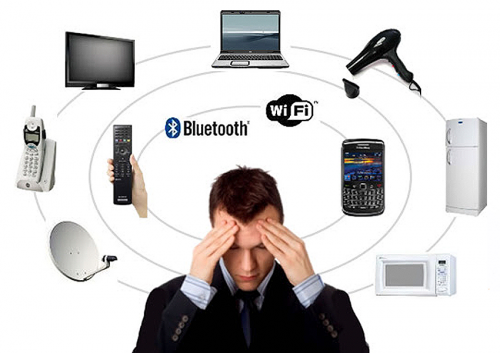
Non-ionizing electromagnetic fields (EMF), such as those emitted by mobile phones, Wi-Fi, power grids, and other everyday devices, can affect both DNA and voltage-gated ion channels (VGCCs, Nav, Kv, etc.) in cell membranes. While EMF do not have enough energy to directly damage DNA, as ionizing radiation does, they can induce indirect effects that alter cellular function, primarily through oxidative stress, changes in gene expression, and dysfunction of ion channels.

Mechanisms of DNA Damage

Non-ionising EMFs can generate oxidative stress, a key mechanism for indirect DNA damage. This oxidative stress increases the production of reactive oxygen species (ROS), which damage DNA bases and the sugar-phosphate chain, which can result in mutations and breaks in the DNA double helix. A common marker for this type of damage is 8-hydroxy-2-deoxyguanosine (8-OHdG). In addition, prolonged exposure to EMF can compromise DNA repair mechanisms, increasing the accumulation of genetic errors. Additionally, EMF may alter the expression of genes related to DNA repair, apoptosis (cell death) and cellular detoxification, reducing the body’s ability to repair damage and maintain genetic stability.


Electrohypersensitivity

Effects on Voltage-Gated Ion Channels

Voltage-gated ion channels are membrane proteins that allow ions to pass through the membrane in response to changes in electrical voltage. These channels are essential for the proper functioning of excitable cells, such as neurons and muscle cells. Exposure to non-ionizing EMF can alter the function of these channels, causing cellular dysfunction and generating various clinical symptoms.

1.Voltage-Gated Calcium Channels (VGCCs)

VGCCs regulate the flow of calcium through cell membranes. Exposure to EMF can activate these channels, allowing an increased influx of intracellular calcium, which leads to several harmful effects:

  • ROS Production: Excess calcium activates enzymes such as NADPH oxidase, which generates ROS, causing oxidative stress and cellular damage.
  • Inflammation: Excess intracellular calcium can trigger the release of inflammatory cytokines, such as IL-6 and TNF-alpha, promoting a chronic inflammatory response.
  • Mitochondrial Dysfunction: Excess calcium affects the mitochondria, disrupting energy production and generating more ROS, which contributes to cellular aging

2. Voltage-Gated Sodium Channels (Nav)

Sodium channels are essential for the generation and propagation of action potentials in excitable cells. Exposure to EMF can disrupt their function, affecting neuronal excitability and leading to symptoms such as fatigue, headaches, or sensory disturbances.

3. Voltage-Gated Potassium Channels (Kv)

Potassium channels are crucial for cellular repolarization after an action potential. Dysfunction of these channels, caused by EMF exposure, can lead to hyperexcitability or disruptions in heart rhythm, such as palpitations or arrhythmias.

4. Voltage-Gated Chloride Channels

Chloride channels regulate membrane potential and cell volume. Their dysfunction can affect membrane voltage stability and lead to neuromuscular and sensory symptoms.

Bhital Environmental Health & Biological Medicine

Diagram: Mechanisms linked to exposure to non-ionising EMFs


This diagram, drawn by Dr. Richard Gautier, illustrates the possible effects of exposure to non-ionising Electromagnetic Fields (EMF). The effects of these mechanisms can manifest themselves as, among others, the following:

  • Headaches (cephalalalgias)
  • Sleep disorders and fatigue
  • Cognitive disorders
  • Brain tumours
  • Neurodegenerative diseases
  • Cancer and leukaemia

The diagram also details how EMFs can alter the permeability of blood-brain and blood-blood barriers, as well as affect melatonin synthesis and immunity in lymphocytes, which could explain their link to chronic and neurodegenerative diseases.


Clinical consequences

1. Oxidative Stress and Inflammation

Excessive activation of voltage-dependent calcium channels causes an increase in ROS and inflammatory cytokines, leading to chronic inflammation and cell damage.

2. Neurological disturbance

Dysfunction of sodium and calcium channels affects neuronal excitability, causing headaches, cognitive problems and sleep disturbances.

3. Cardiovascular problems

Potassium channel dysfunction alters cardiac repolarisation, leading to palpitations and arrhythmias in sensitive individuals.

4. Muscle Disorders

Changes in ion channels can alter muscle function, causing muscle spasm, fatigue and weakness.

environmental

Scientific evidence

  1. Martin Pall and VGCCs: Dr. Martin Pall proposed that non-ionising EMFs affect VGCCs, increasing intracellular calcium entry and triggering a cascade of oxidative stress and cell damage.
    • Reference: Pall, M. L. (2013). Electromagnetic fields act via activation of voltage-gated calcium channels to produce beneficial or adverse effects. Journal of Cellular and Molecular Medicine, 17(8), 958-965. DOI: 10.1111/jcmm.12088.
  2. EMF oxidative stress: Exposure to non-ionising EMF can induce the production of ROS, leading to oxidative stress and DNA damage.
    • Reference: Belpomme, D., Hardell, L., Belyaev, I., Burgio, E., & Carpenter, D. O. (2018). Thermal and non-thermal health effects of low intensity non-ionizing radiation: An international perspective. Environmental Pollution, 242, 643-658. DOI: 10.1016/j.envpol.2018.07.019.
  3. Neurological effects and EMF: EMF can alter neuronal function, causing symptoms such as fatigue, headaches and cognitive problems.
    • Reference: Belyaev, I., Markova, E., Hillert, L., Malmgren, L. O., & Persson, B. R. (2009). Microwaves from mobile phones inhibit 53BP1 focus formation in human stem cells more strongly than in differentiated cells: Possible mechanistic link to cancer risk. Environmental Health Perspectives, 117(6), 870-876. DOI: 10.1289/ehp.0800465.
  4. EMF-induced inflammation: EMF can induce inflammatory responses by activating calcium channels and producing ROS.
    • Reference: Yakymenko, I., Sidorik, E., Kyrylenko, S., & Chekhun, V. (2011). Long-term exposure to microwave radiation provokes cancer growth: Evidences from radars and mobile communication systems. Experimental Oncology, 33(2), 62-70.


Conclusion

Exposure to non-ionising electromagnetic fields (EMF) can have harmful effects on health by altering voltage-dependent ion channels, particularly VGCCs. These alterations can generate excess intracellular calcium, triggering a cascade of harmful biological events such as oxidative stress, chronic inflammation, mitochondrial dysfunction, and a range of neurological, cardiovascular and muscular consequences. Although EMFs do not cause direct DNA damage, the cumulative effects of prolonged exposure can compromise DNA repair mechanisms and alter gene expression, which may increase the risk of chronic, neurodegenerative diseases and even cancer

Health impacts include cognitive problems, sleep disorders, headaches, and even more serious conditions such as cardiac arrhythmias, muscle weakness and neurological disorders. Reducing oxidative stress, inflammation and improving the body’s detoxification systems are essential steps to mitigate the negative effects of exposure to non-ionising EMFs. Taking preventive measures to reduce exposure and improve the body’s antioxidant defences is key to creating a healthier environment and prolonging quality of life.

Take action

If you are concerned about the potential effects of exposure to non-ionising electromagnetic fields on your health, it is important to take proactive measures. Through a holistic medical approach, you can reduce the negative effects of oxidative stress, inflammation and enhance detoxification mechanisms to protect yourself and optimise your well-being. In addition, a personalised analysis of your environment can help reduce exposure to these non-ionising EMFs, contributing to a healthier environment at both the cellular and environmental levels.

Request a medical appointment today to create a personalised action plan that addresses these key factors and improves your overall health. You can get in touch via WhatsApp on 669 979 939 and request an environmental health medical visit. Together, we will work to:

  • Decrease oxidative stress in your body,
  • Reducing chronic inflammation ,
  • Optimise your detoxification systems,
  • Assess your environment and reduce exposure to non-ionising EMFs.

It’s time to take control of your health and create a healthier environment for you and your family – I’m here to help!

https://bhital.com/wp-content/uploads/2024/10/CEMG-NO-IONIZANTES.png 1599 1149 Dra. Carmen Romero https://bhital.com/wp-content/uploads/2026/02/Logo-Web-Menu-271X300.png Dra. Carmen Romero2024-10-18 12:55:462025-04-21 11:42:46Non-ionizing electromagnetic fields.

Bloquear la luz azul

17/10/2024/en Novedades de nuestro Blog/por Dra. Carmen Romero

Bloquear la luz azul con gafas, filtros y luces: clave para un envejecimiento saludable

Bloquear la luz azul es clave para un envejecimiento saludable. Protegerse de esta luz, especialmente la emitida por dispositivos electrónicos, es fundamental para mantener la salud visual y regular los ritmos circadianos, que juegan un papel crucial en el bienestar general. Las gafas, filtros y luces adecuadas son herramientas eficaces para reducir este impacto y promover un envejecimiento sano y equilibrado.

¿Qué es la luz azul y cómo afecta nuestra salud?

La luz azul es parte del espectro visible y es emitida tanto por la luz solar como por pantallas digitales. Mientras que la exposición a la luz azul natural es beneficiosa durante el día, el problema surge con el uso excesivo de dispositivos electrónicos, lo que puede llevar a fatiga visual, dolores de cabeza y alteraciones del sueño. Bloquear la luz azul no solo protege tu vista, sino que también mejora tu descanso, lo cual es fundamental en cualquier enfoque de medicina antiaging.


Gafas para bloquear la luz azul y filtros para pantallas

  • Gafas con lentes transparentes: bloquean una pequeña cantidad de luz azul y son adecuadas para el uso diario frente a pantallas.
  • Gafas con lentes amarillas: ofrecen una mayor protección y son recomendables para el trabajo intensivo con dispositivos, especialmente en las horas de la tarde y noche.
  • Gafas con lentes naranjas: ideales para mejorar la calidad del sueño, bloqueando el 100% de la luz azul y verde. Úsalas 1 o 2 horas antes de dormir para asegurar una producción adecuada de melatonina.

  • Filtros para pantallas: una alternativa o complemento a las gafas. Estos filtros bloquean la luz azul directamente en la fuente, permitiendo una protección constante. Asegúrate de elegir filtros de calidad para obtener los mejores resultados.


Iluminación en el hogar: ¿Por qué usar luces más amarillas?

Otra forma eficaz de reducir la exposición a la luz azul en el entorno es mediante el uso de luces más amarillas en el hogar. Las bombillas con una temperatura de color más cálida (entre 2700K y 3000K) emiten una luz amarillenta que es mucho más suave para los ojos y menos disruptiva para los ritmos circadianos. Estas luces, en lugar de las luces blancas o frías, son especialmente recomendables en las zonas donde pasas tiempo antes de dormir, como dormitorios o salas de estar.

Cambiar a luces más amarillas en el hogar es una excelente estrategia para reducir el impacto de la luz azul y mejorar la calidad de tu descanso, haciendo de tu entorno un espacio más propicio para la salud y el bienestar. Optar por luces de tonos cálidos, como las luces amarillas, ayuda a crear un ambiente más suave para los ojos, favoreciendo la relajación y reduciendo el impacto negativo de la luz azul en tu descanso.

LUZ NO LED

Luz cálida

¿Cuándo deberías bloquear la luz azul?

  1. Durante el día: usa gafas con lentes transparentes o filtros de pantalla para reducir la exposición a la luz azul mientras trabajas.
  2. Por la tarde y noche: cambia a gafas con lentes amarillas y ajusta la iluminación del hogar, usando luces más cálidas para evitar la alteración de los ritmos circadianos.
  3. Antes de dormir: usa gafas naranjas y asegúrate de que la iluminación de tu entorno sea suave y cálida, promoviendo así un descanso reparador

Luz natural: tu mejor aliado para un envejecimiento saludable

Además de protegernos de la luz azul artificial, la exposición a la luz natural es fundamental para mantener nuestros ritmos circadianos en equilibrio. Un hábito tan sencillo como salir al aire libre al despertar, dejando que tu piel y tus ojos reciban la luz del sol, puede generar grandes beneficios. Si puedes, trata de exponerte al sol directamente sobre la piel durante el día. Esto no solo mejorará tu bienestar inmediato, sino que también favorecerá la liberación nocturna de melatonina, una hormona crucial para el descanso y la longevidad. Incluso si el día está nublado, unos minutos al aire libre son mejores que nada.

Beneficios de la exposición solar en la salud

Estudios recientes sugieren que la exposición diurna al sol mejora la liberación de melatonina por la noche. Además, ayuda a almacenar melatonina en las mitocondrias, lo cual es esencial para optimizar la energía celular y combatir los efectos del envejecimiento. Como indica la investigación de 2019, “Mientras que la melatonina circulante puede ser la ‘hormona de la oscuridad’, la melatonina subcelular puede ser la ‘hormona de la luz del día’” (Melatonin Research, 2019)https://melatonin-research.net/index.php/MR/article/view/19 ).

Bloqueadores de luz azul: una herramienta diaria

Para quienes pasan muchas horas frente a la pantalla, las gafas bloqueadoras de luz azul son una herramienta indispensable. No solo protegen tus ojos, sino que también pueden mejorar la concentración y reducir la fatiga visual. Muchos usuarios reportan una notable reducción de la “niebla mental” y un aumento en la productividad tras usar bloqueadores. Esto es especialmente cierto en el caso de aquellos con lentes amarillas o naranjas, que se adaptan al horario del día.

Uso de lentes más oscuros por la noche

Al caer la noche, cambiar a lentes más oscuros, como los de color rojo, puede inducir el sueño con mayor rapidez y profundidad. La luz azul artificial interfiere con la producción de melatonina. Al bloquearla, ayudas a tu cuerpo a relajarse y prepararse para un descanso más reparador. La experiencia de muchos usuarios, incluido el Dr. Ben Lynch, muestra que los bloqueadores de luz azul pueden mejorar significativamente la calidad del sueño y el bienestar general.

Encuentra tu equilibrio para una vida más plena

Es importante recordar que no necesitas volverte excesivamente rígido con el uso de bloqueadores de luz azul. Disfruta de tus momentos sociales, salidas nocturnas o cenas con amigos sin preocuparte si no los usas. Lo esencial es mantener un equilibrio. Protege tus ojos la mayor parte del tiempo, pero permítete disfrutar de la vida social sin comprometer tu bienestar.

Conclusión: La importancia de bloquear la luz azul

Bloquear la luz azul a través de gafas o  filtros de pantalla y el uso de luces cálidas en el hogar es clave para proteger tu salud visual, mejorar la calidad del sueño y prevenir los efectos negativos del envejecimiento prematuro. Estas medidas son esenciales en la medicina antiaging, donde el objetivo es envejecer de manera saludable y mantener el bienestar general.

Para más información sobre cómo mejorar tu entorno y proteger tu salud, visita nuestra web Bhital.com.

Concierta una cita para una consulta médica personalizada. ¡Envíanos un WhatsApp al 669 979 939 o visita nuestra web Bhital.com para descubrir más sobre cómo la luz azul afecta tu salud y qué hacer para protegerte!

https://bhital.com/wp-content/uploads/2024/10/Melatonina-vs-luz-azul.png 1348 1360 Dra. Carmen Romero https://bhital.com/wp-content/uploads/2026/02/Logo-Web-Menu-271X300.png Dra. Carmen Romero2024-10-17 17:21:542025-04-21 11:43:27Bloquear la luz azul

EMF hazards: the current evidence is overwhelming and indisputable.

16/10/2024/en News from our Blog/por Dra. Carmen Romero

Dangers of EMFs: ‘The current evidence is overwhelming and indisputable’ – Nick Pinault’s interview with biophysicist Dr. Dimitris J. Panagopoulos

Dangers of EMFs: ‘The current evidence is overwhelming and indisputable’.
Interview with biophysicist Dr. Dimitris J. Panagopoulos

Years after writing ‘The Non-Paranoid Guide to EMFs’, where I argued that our current use of man-made EMFs (mobile phones, Wi-Fi, Bluetooth, mobile phone towers, etc.) is reckless, irresponsible. And one of the most likely causes of the modern epidemic of chronic disease… I still regularly argue with ‘sceptics’ who tell me:

  • There are no credible scientific studies showing that man-made EMFs cause harm.
  • Anyone who argues that EMFs could be dangerous should wear a tinfoil hat is either delusional or paranoid.
  • There are no known mechanisms that can explain how ‘low levels’ of EMF can cause harm.
  • Man-made EMFs, such as those from phones, Wi-Fi or Bluetooth gadgets, are ‘non-ionising’. And therefore they can’t damage your DNA or cause any harm.
  • Sunlight exposes you to an incredible amount of radiation, which proves that mobile phones could not harm you at such low power levels.

I see one form or another of the above arguments being used by doctors of physics, medical doctors, professional sceptics, science writers and, of course, electrical engineers.

Rather than argue with them – hey, after all, I’m just a citizen journalist trying to understand all this – I decided to ask one of the most renowned scientists in the field of the biological and health effects of EMFs what he thinks.

Are man-made EMFs safe or dangerous? Are there mechanisms that can explain the harm caused by EMFs? Have I lost my mind? Was Elon Musk right?

I sent several questions to biophysicist Dr. Dimitris J. Panagopoulos. Here is what he had to say.

Dr. Dimitris J. Panagopoulos, a biophysicist specialising in EMF, works at the Choremeion Research Laboratory, Faculty of Medicine, National Kapodistrian University of Athens, Greece. His experiments were among the first to show harmful effects of microwaves and other man-made EMF on DNA and reproduction. His theory of the biophysical mechanism of action of EMFs on cells, also known as the ‘ion-forced oscillation mechanism’, is considered the most plausible. It has explained why man-made polarised EMFs are much more harmful than natural, non-polarised EMFs. And why real, highly variable exposures from mobile phones and other microwave devices are much more harmful than simulated exposures with unchanging parameters.

Definitions:

  • WC: Wireless communication (mobile/smartphones, Wi-Fi, Bluetooth, mobile phone towers, etc.)
  • EMF: Electromagnetic fields
  • RF: Radio frequency radiation (mobile/smart phones, Wi-Fi, Bluetooth, mobile phone towers, etc.)
  • VGICs: Voltage-regulated ion channels
  • mV: millivolt
  • ROS: Reactive Oxygen Species
  • OS: Oxidative stress
  • EHS: Electrohypersensitivity
  • AC: Alternating current
  • Anthropogenic EMF: Man-made electromagnetic fields. This includes wireless communication, but also other types such as dirty electricity, AC electric fields, AC magnetic fields, electric and magnetic fields from power lines, etc.).
  • MT: mobile telephony (mobile/smart phones)
  • km: Kilometres

Electrohypersensitivity

1) His recent article ‘Mobile phone radiation exerts a genotoxic action and significantly enhances the effects of gamma radiation on human cells’. It showed that radiofrequency radiation enhances the genotoxic action of gamma radiation.

Q: Given that aeroplanes are now full of Wi-Fi (radio frequency) emissions, what are the implications of this study for pilots, flight attendants or passengers?

A: The experiments described in this article showed that electromagnetic fields (EMF) from wireless communication (WC) act synergistically with ionising radiation (gamma). Similarly, previous experiments (Panagopoulos 2020) showed that they also act synergistically with caffeine. This means that combined exposure to several stressors induces significantly more biological damage than exposure to the stressors separately.

In fact, more than that: the combined exposure in both cases (with gamma radiation or caffeine) induced more aberrations than the sum of the aberrations induced by the separate exposures. Today, people are exposed daily not only to EMFs from WC, but also to a variety of other stressors such as chemicals, pharmaceuticals, psychological stress, etc.

On aeroplanes during flights, people are exposed to increased levels of ionising radiation of cosmic and solar origin. Each form of ionising radiation is significantly more genotoxic and carcinogenic than man-made EMFs. People exposed in an aircraft become even more vulnerable to ionising radiation. This is due to the use of smartphones, tablets and other devices wirelessly connected to the internet during flights.

In addition, electromagnetic radiation from WC devices is trapped and magnified inside the aircraft’s metal cage. Acting as a ‘Faraday cage’, exposing every passenger and crew member to significant levels of EMF. If authorities really protected public health, the use of WC devices should be strictly prohibited. Not only in aeroplanes, but also in all public transport vehicles (trains, buses, etc.).

I should also say that all types of EMF from the WC (from telephones mobile/wireless, Wi-Fi, etc.) are not simply radio frequency (RF) emissions. They consist of modulated RF EMF (300 kHz-300 GHz) emitted as repeated on/off pulses at various very low frequencies (ELF: 0-3000 Hz) and with intense variability in intensity, frequency and other parameters, mainly in the ultra-low frequency band (0-3 Hz). In other words, they are a combination of high and low frequency emissions (RF/ELF/ULF).

2) It has recently been stated that ‘power level is irrelevant’ when it comes to the biological effects of man-made electromagnetic radiation.

Q. The argument includes, for example, the idea that ‘little or no power is needed to interfere with life’ and that ‘low power can be more harmful than high power’. Do you agree with these statements?

A. No, I disagree.
The effects of all anthropogenic EMFs, including wireless communication (WC), are dose-dependent and, moreover, increase with increasing levels of power density (intensity) in the vast majority of cases. However, they do not always increase linearly (doubling the exposure level does not necessarily double the effect). Occasionally, so-called ‘window’ effects have been reported in the literature. That is, an effect may peak within certain values of the exposure parameters and decrease for both lower and higher values. Several scientists, including myself, have reported such effects (Panagopoulos et al. 2010).

Window’ effects are due to the fact that living tissue does not always respond linearly to an applied stressor/EMF. For example, voltage-gated ion channels (VGICs), which are the natural EMF sensors in all animal and plant cell membranes, do not respond to any change in membrane voltage. Only to voltage changes of approximately 30 to 100 millivolts (mV).

For larger voltage changes, the ionic flux through the channel becomes saturated. This is an energy-saving mechanism that acts as a natural protection for the cell. I have argued that the explanation behind the ‘window’ effects long reported in the literature is actually the existence of this corresponding window (30-100 mV) in the opening/closing of VGICs (Panagopoulos et al. 2021). And possibly also other biological ‘windows’ or resonance phenomena that have not yet been discovered or are not fully understood.

In conclusion, the existence of non-linear effects in biology is a fact, but this does not justify claims that the power level is irrelevant.

If the power level were irrelevant, that would mean that being exposed to a cellular base station antenna at a distance of 1 kilometre (km) or a few metres would make no difference. It would also mean that using the mobile phone at a distance via speakerphone or air-tube headset during calls would make no difference compared to using the mobile phone close to the head/body, which is a totally misleading and dangerous idea.

This would also justify the current absence of any caution in the use of WC devices, and the current practice of installing antennas close to homes and workplaces without maintaining a safe distance of at least several hundred metres, depending on the transmitting power.

DNA

3) In 2021, it published a seminal paper.

In which he demonstrated that he had arrived at a ‘complete picture […] of how exposure to man-made EMFs can indeed lead to DNA damage and related pathologies, including cancer’.

Q: Can you explain, in simple terms, how these man-made EMF exposures (including wireless communications) impact human cells?

A: This article addresses the biophysical mechanism of action of EMFs on cells. It explains how polarised and coherent (man-made) EMFs, including wireless communications (WC), can cause dysfunction of voltage-gated ion channels (VGICs). VGICs, the natural EMF sensors in living organisms, are the most abundant class of ion channels in all animals (and plants). This shows that all living organisms are essentially electromagnetic in nature.

All processes in cells are initiated and mediated by ionic fluxes (endogenous electrical currents) through cells, tissues and ion channels in cell membranes. Irregular opening and closing (dysfunction) of VGICs, as shown in this mechanism, alters ionic concentrations in cells. This leads to triggering the (over)production of reactive oxygen species (ROS) by specific enzymes in cells that normally produce ROS for physiological purposes, such as protection against infectious microorganisms.

These enzymes are activated by alterations in the concentrations of various ions in cells, such as calcium, potassium, sodium or protons. Prolonged overproduction of ROS in cells is an irritating/inflammatory condition called oxidative stress (OS), which can easily result in various pathologies.

A relatively mild ‘pathology’ of this type is what is called electromagnetic hypersensitivity (EHS) in its early stages. Actually, in my opinion, this is not a pathology. It is a healthy reaction to unnatural exposure, which is fully polarised and coherent (man-made) EMF. If the person does not minimise the exposure in the early stages of the onset of EHS, the initial healthy reaction can turn into a severe pathology with unbearable symptoms. The continuous production of ROS due to continuous exposure is connected to DNA damage induced by certain ROS. ROS are particularly harmful, such as hydroxyl radical or peroxynitrite.

These ROS can easily damage DNA and other critical biomolecules. Irreparable damage to DNA can lead to cell death or mutations, which in turn can lead to reproductive problems, organic diseases and cancer. Therefore, the biophysical mechanism initiates a cascade of biochemical events. These events result in oxidative stress (OS) in cells and the various pathologies reported in the literature. OS was long ago reported to be induced by exposure to anthropogenic EMF, and this article explained why and how it occurs.

The same biophysical mechanism explains most, if not all, of the reported biological effects of EMFs, including ‘window’ effects. It has also explained the ability of sensitive people to perceive impending thunderstorms (Panagopoulos and Balmori 2017). As well as, the ability of certain animals to perceive impending earthquakes (Panagopoulos et al. 2020) through the action of natural EMFs associated with these phenomena.

Recently, the same mechanism has explained one of the best-known scientific problems: how migratory animals orient themselves and navigate over thousands of kilometres on Earth. Finding exact locations by detecting the strength and direction of the geomagnetic field. Unfortunately, my colleagues and I have had trouble getting this article published. Just as we had trouble publishing other papers before (papers that have now been widely accepted and cited by hundreds of other studies).

Unfortunately, conflicts of interest and corruption in science have left many of the leading scientific journals unaffected. Certain people do not want this mechanism to be widely known and established. Instead, they favour other theories that are complicated and impossible, which gets the science nowhere. In fact, the adverse biological and health effects of man-made EMFs can now be thoroughly explained and confirmed. But they do not want this fact to be widely accepted, although every true expert admits it.

They prefer to sow confusion, doubt and ignorance in the public. Many scientists also promote this confusion in various ways. Whether they know it or not, by supporting, for example, impossible theories that lead nowhere.

ELECTROHYPERSENSITIVITY TEST

ELECTROHYPERSENSITIVITY TEST

4) I keep coming across statements like ‘non-ionising radiation cannot damage DNA’ (from PhD physicists).

Q: Although you and many of your colleagues have shown this to be completely false decades ago. How do you think we can break through this veil of ignorance?

A: Such erroneous statements are made because some physicists and engineers confuse living tissue with inanimate matter. Living tissue does not respond to EMFs and other stressors in the same way as inanimate matter. It is much more complicated than that. A relevant statement would be ‘non-ionising radiation cannot directly cause DNA damage’. But it can do so indirectly in living cells by causing dysfunction of VGICs. This alters ionic concentrations in cells, triggering the production of ROS, as I explained earlier.

ROS can then easily damage DNA and other critical biological molecules. As many experimental studies in which animals and cells were exposed to man-made EMFs have shown. In fact, EMFs from wireless communication (WC) from mobile phones and other devices/antennas cause oxidative stress (OS) and DNA damage within minutes. This, in turn, explains epidemiological studies that have connected exposure to man-made EMFs to cancer. [Nick’s note: For example, this 2018 review by Miller et al. shows that radiofrequency radiation should be reclassified as a definite class 1 carcinogen].

The above provides a complete explanation of the biological mechanisms. But in addition, the confidence of some people/scientists who claim that anthropogenic EMFs, at frequencies below those of infrared radiation, cannot cause ionisation, i.e. break chemical bonds. This stems from the erroneous and misleading assumption of modern quantum physics. That any EMF consists of photons, regardless of how it is generated.

According to this assumption, microwaves and other forms of anthropogenic EMF, which have lower frequencies than infrared and visible light, «do not have enough energy in their photons» to produce ionization. However, anthropogenic EMF do not consist of photons, as I have previously argued (Panagopoulos 2018).

They consist of continuous waves as described by classical electromagnetism, not by quantum physics. Continuous waves are not instantaneous emissions (photons). They can have durations that are trillions of times longer, and therefore, can possess much more energy than a photon. Even when their frequency is much lower.

geo-environmental analysis

In your 2019 article «Comparing DNA damage induced by mobile telephony and other types of man-made electromagnetic fields,» you confirmed your previous work showing that actual mobile telephony (MT) devices cause more DNA damage than other types of man-made EMF (50/60 Hz magnetic or electric fields).

Q: Could you explain why these experiments were conducted on fruit flies (Drosophila) and how applicable these results are to humans?

A: These experiments were conducted on fruit flies. This insect is one of the most studied and common laboratory animals in biology. They are small, clean, and easy to maintain in the lab. Additionally, they have a well-defined schedule of developmental processes under controlled conditions, and a lifespan of approximately one month. This allows us to observe systemic (whole-body) effects much faster than in humans or other animals, among many other advantages.

Most importantly, their cells, like those of all insects, are essentially the same as those of mammals (including humans). They have the same types of cell membranes, proteins, ion channels, intracellular organelles, nuclei, DNA, and the same ions that control all cellular processes.

Considering that all biological and health effects begin within the cells, any effect found in Drosophila is absolutely expected in mammals, including humans, and vice versa. Although their lifespan is too short to develop cancer, this animal is used in cancer research due to its genetic similarities with mammals and humans.

My experiments showed similar DNA damage in both fruit fly cells and human cells. This damage occurred after exposure to radiation from both mobile phones and other types of man-made EMF. As you mentioned, the EMF from mobile phones caused more damage than the EMF from power lines, which have long been linked to cancer.

Many scientists who study EMF have faced systematic attacks throughout their careers.

Q: Considering that you co-authored and edited the most comprehensive book ever written on the biological and health effects of man-made EMF in 2023, do you believe things are changing now that the published literature is becoming harder to ignore?

A: Indeed, some of the pioneering scientists who first reported DNA damage and other significant biological effects in the 1990s and early 2000s, after exposing biological samples to anthropogenic EMF, were unethically attacked by «scientists» hired for that purpose. They were even accused of having falsified their data.

Nowadays, hundreds of published and peer-reviewed studies have confirmed these effects. Unfortunately, as far as I know, those who accused them did not face legal consequences, and the damage done to the scientists was never restored. The current evidence is overwhelming and indisputable, and as you mentioned, it is becoming increasingly difficult to dismiss

The recent book is a source of evidence-based knowledge for all those who want to learn the truth in this highly debated scientific field. It is also for those who wish to understand the science and protect themselves, their loved ones, and the environment. I highly recommend it to everyone.

Interview conducted by Nick Pinault.

https://bhital.com/wp-content/uploads/2024/10/libro-dr-dimitris.png 1204 885 Dra. Carmen Romero https://bhital.com/wp-content/uploads/2026/02/Logo-Web-Menu-271X300.png Dra. Carmen Romero2024-10-16 20:59:092025-04-21 11:46:39EMF hazards: the current evidence is overwhelming and indisputable.

Osteoporosis, a complete guide

16/10/2024/en News from our Blog/por Dra. Carmen Romero

This is your complete guide to preventing osteoporosis.

Osteoporosis is a silent disease that affects millions of people, especially women over the age of 50. It is characterised by a decrease in bone density that increases the risk of fractures, even with minor falls. If not detected and treated early, it can severely affect quality of life and be associated with other age-related conditions such as atherosclerosis, dementia and depression.

What is osteoporosis and why is it important to prevent it?

Osteoporosis, literally ‘porous bone’, occurs when the body loses more bone tissue than it produces. This weakens bones, making them more prone to fractures. It affects 22% of women over the age of 50, and an estimated 25.5 million women in Europe are living with osteoporosis. However, the good news is that there are several ways to prevent and treat the disease. This comprehensive guide to osteoporosis will help you strengthen your bones and prevent bone deterioration.

Tips to prevent osteoporosis and improve bone health

1. Walk and do resistance exercises

Physical exercise is essential for maintaining bone health. Walking 30 minutes a day can help improve bone density and strengthen the muscles surrounding the bones, which reduces the risk of falls. Strength training with weights or elastic bands is another effective way to strengthen your bones. These exercises are especially useful in critical areas such as the spine, hips and wrists, as they stimulate bone formation by exercising muscles and improving balance.

Osteporosis

2. Exercises with blood flow restriction (BFR)

Blood flow restriction training (BFR) is an innovative technique that can be very effective in improving bone density. A cuff is used to partially restrict blood flow during exercise, which generates a physiological response similar to lifting heavy weights, but with much lighter loads. This technique is ideal for people who cannot carry much weight, but want to improve both muscle strength and bone health.

3. Bioidentical hormones: oestrogen and testosterone

Hormones play a crucial role in bone health, especially in women going through the menopause. Estrogen and testosterone levels decrease during this stage of life, which can accelerate bone loss. Bioidentical hormone therapy helps to balance these levels, maintaining bone density and reducing the risk of fractures. Both oestrogen and testosterone are essential for bone health: oestrogen prevents bone resorption, while testosterone helps maintain muscle strength and mass, which is key to bone stability.

4. Cortisol control and stress reduction

Cortisol, a hormone released in response to stress, can negatively affect bone health when found in elevated levels over long periods of time. Cortisol inhibits bone formation and increases resorption, which means that bones lose more tissue than they can regenerate. In addition, elevated cortisol reduces calcium absorption and oestrogen levels, further complicating the situation. Practising relaxation techniques, such as meditation or deep breathing, can help keep cortisol levels under control and therefore protect your bones. Reducing stress is a key measure to prevent osteoporosis.

5. Healthy, balanced nutrition and essential supplements for your bones.

Good nutrition is essential for bone health. Make sure you include the following 8 essential nutrients in your diet:

  • Calcium: essential for bone formation and maintenance.
  • Magnesium: helps absorb calcium and is vital for bone mineralisation.
  • Manganese: involved in bone and cartilage formation.
  • Vitamin D: facilitates calcium absorption in the intestine.
  • Vitamin K: helps regulate calcium and promotes bone formation.
  • Zinc: involved in the formation of bone proteins.
  • Boron and silicon: support bone health and improve mineralisation.

Make sure your diet contains a good source of these nutrients or consider a specialised supplement if needed to strengthen your bones.

6. Avoid harmful habits such as smoking

Smoking accelerates bone loss and significantly increases the risk of osteoporosis. Smoking directly affects the body’s ability to absorb calcium and other nutrients needed to maintain strong bones. Avoiding tobacco is an important decision to prevent osteoporosis.

7. Getting a good night’s sleep is crucial

Adequate rest is essential for tissue regeneration, including bone. During sleep, the body recovers and cell regeneration takes place, which contributes to better bone health. Getting enough quality sleep should be a priority in any strategy to strengthen your bones.
8. Fracture risk assessment and bone density testing: The use of tools such as the FRAX (Fracture Risk Assessment Tool) to assess the 10-year risk of osteoporotic fractures is common in medical guidelines. In addition, bone densitometry tests (DXA), which measure bone mineral density and allow monitoring of bone health over time, are recommended. MSKDoctors MSKDoctors .

Take care of your bones for a better life tomorrow

Preventing osteoporosis is possible if you start adopting these habits today. Choose a comprehensive approach that includes exercise, proper nutrition, stress management and, in some cases, the help of bioidentical hormone therapies. The time to start caring for and strengthening your bones is now. For more information and advice on how to maintain a healthy and long life, visit my website Bhital.com. Contact me by WhatsApp at 669 979 939 or schedule your consultation directly on the website.


https://bhital.com/wp-content/uploads/2024/10/Osteoporosis-1.png 1675 1676 Dra. Carmen Romero https://bhital.com/wp-content/uploads/2026/02/Logo-Web-Menu-271X300.png Dra. Carmen Romero2024-10-16 19:08:362025-04-21 11:45:06Osteoporosis, a complete guide

Osteoporosis, guía completa

15/10/2024/en Novedades de nuestro Blog/por Dra. Carmen Romero

Osteoporosis, guía completa para prevenirla

La osteoporosis es una enfermedad silenciosa que afecta a millones de personas, especialmente a mujeres mayores de 50 años. Se caracteriza por una disminución en la densidad ósea que aumenta el riesgo de fracturas, incluso con caídas menores. Si no se detecta y se trata a tiempo, puede afectar gravemente la calidad de vida y estar asociada a otras condiciones relacionadas con la edad, como la aterosclerosis, la demencia y la depresión.

¿Qué es la osteoporosis y por qué es importante prevenirla?

La osteoporosis, literalmente «hueso poroso», ocurre cuando el cuerpo pierde más tejido óseo del que produce. Esto debilita los huesos, haciéndolos más propensos a fracturas. Afecta al 22% de las mujeres mayores de 50 años, y se estima que 25.5 millones de mujeres en Europa viven con osteoporosis.

Sin embargo, la buena noticia es que existen diversas formas de prevenir y tratar esta enfermedad. Esta guía completa sobre osteoporosis te ayudará a fortalecer los huesos y prevenir su deterioro.

Consejos para prevenir la osteoporosis y mejorar la salud ósea

1. Camina y realiza ejercicios de resistencia

El ejercicio físico es fundamental para mantener la salud ósea. Caminar 30 minutos al día puede ayudar a mejorar la densidad ósea y fortalecer los músculos que rodean los huesos, lo que reduce el riesgo de caídas.

El entrenamiento de fuerza con pesas o bandas elásticas es otra forma efectiva de fortalecer tus huesos. Estos ejercicios son especialmente útiles en áreas críticas como la columna, las caderas y las muñecas, ya que estimulan la formación ósea al ejercitar los músculos y mejorar el equilibrio.

Osteporosis

2. Ejercicios con restricción del flujo sanguíneo (BFR)

El entrenamiento con restricción del flujo sanguíneo (BFR) es una técnica innovadora que puede ser muy efectiva para mejorar la densidad ósea. Se utiliza un manguito para restringir parcialmente el flujo sanguíneo durante el ejercicio, lo que genera una respuesta fisiológica similar a levantar pesas pesadas, pero con cargas mucho más ligeras. Esta técnica es ideal para personas que no pueden cargar mucho peso, pero quieren mejorar tanto la fuerza muscular como la salud ósea.

3. Hormonas bioidénticas: Estrógeno y testosterona

Las hormonas juegan un papel crucial en la salud ósea, especialmente en mujeres que pasan por la menopausia. Los niveles de estrógeno y testosterona disminuyen durante esta etapa de la vida, lo que puede acelerar la pérdida ósea.

La terapia con hormonas bioidénticas ayuda a equilibrar estos niveles, manteniendo la densidad ósea y reduciendo el riesgo de fracturas. Tanto el estrógeno como la testosterona son esenciales para la salud ósea: el primero previene la resorción ósea, mientras que el segundo contribuye a mantener la fuerza y masa muscular, clave para la estabilidad de los huesos.

4. Control del cortisol y reducción del estrés

El cortisol, una hormona liberada en respuesta al estrés, puede afectar negativamente la salud ósea cuando se encuentra en niveles elevados durante largos periodos de tiempo. El cortisol inhibe la formación ósea y aumenta la resorción, lo que significa que los huesos pierden más tejido del que pueden regenerar. Además, el cortisol elevado reduce la absorción de calcio y los niveles de estrógeno, lo que complica aún más la situación.

Practicar técnicas de relajación, como la meditación o la respiración profunda, puede ayudar a mantener bajo control los niveles de cortisol y, por lo tanto, proteger tus huesos. Reducir el estrés es una medida clave para prevenir la osteoporosis.

5.  Nutrición saludable y equilibrada, además de suplementos esenciales para tus huesos

Una buena nutrición es fundamental para la salud ósea. Asegúrate de incluir en tu dieta los siguientes 8 nutrientes esenciales:

  • Calcio: fundamental para la formación y mantenimiento óseo.
  • Magnesio: ayuda a absorber el calcio y es vital para la mineralización de los huesos.
  • Manganeso: participa en la formación de hueso y cartílago.
  • Vitamina D: facilita la absorción de calcio en el intestino.
  • Vitamina K: ayuda a regular el calcio y favorece la formación ósea.
  • Zinc: involucrado en la formación de proteínas óseas.
  • Boro y silicio: apoyan la salud ósea y mejoran la mineralización.

Asegúrate de que tu dieta contenga una buena fuente de estos nutrientes o considera un suplemento especializado si es necesario para fortalecer tus huesos.

6. Evita hábitos perjudiciales como el tabaco

Fumar acelera la pérdida ósea y aumenta significativamente el riesgo de osteoporosis. El tabaco afecta directamente la capacidad del cuerpo para absorber calcio y otros nutrientes necesarios para mantener los huesos fuertes. Evitar el tabaco es una decisión importante para prevenir la osteoporosis.

7. Dormir bien es crucial

El descanso adecuado es fundamental para la regeneración de los tejidos, incluidos los huesos. Durante el sueño, el cuerpo se recupera y se realiza la regeneración celular, lo que contribuye a una mejor salud ósea. Dormir lo suficiente y en condiciones de calidad debe ser una prioridad en cualquier estrategia para fortalecer tus huesos.

8. Evaluación del riesgo de fractura y pruebas de densidad ósea: El uso de herramientas como el FRAX (Fracture Risk Assessment Tool) para evaluar el riesgo de fracturas osteoporóticas a 10 años es común en guías médicas. Además, se recomienda realizar pruebas de densitometría ósea (DXA), que miden la densidad mineral ósea y permiten monitorear la salud ósea a lo largo del tiempo​ MSKDoctors MSKDoctors

.

Cuida tus huesos para vivir mejor mañana

Prevenir la osteoporosis es posible si comienzas a adoptar estos hábitos hoy mismo. Elige un enfoque integral que incluya ejercicio, nutrición adecuada, manejo del estrés y, en algunos casos, la ayuda de terapias hormonales bioidénticas. El momento de empezar a cuidar y fortalecer tus huesos es ahora.

🔗 Para más información y consejos sobre cómo mantener una vida saludable y longeva, visita mi web Bhital.com. Contacta conmigo a través de WhatsApp al 669 979 939 o agenda tu consulta directamente en la web.


https://bhital.com/wp-content/uploads/2024/10/Osteoporosis-1.png 1675 1676 Dra. Carmen Romero https://bhital.com/wp-content/uploads/2026/02/Logo-Web-Menu-271X300.png Dra. Carmen Romero2024-10-15 10:23:592025-04-21 11:47:52Osteoporosis, guía completa

Peligros de los EMF: la evidencia actual es abrumadora e indiscutible

07/10/2024/en Novedades de nuestro Blog/por Dra. Carmen Romero

 Peligros de los EMF: «La evidencia actual es abrumadora e indiscutible» – Entrevista de Nick Pinault  al  biofísico Dr. Dimitris J. Panagopoulos

Peligros de los EMF: «La evidencia actual es abrumadora e indiscutible»
Entrevista con el biofísico Dr. Dimitris J. Panagopoulos

Años después de escribir «La guía no paranoica de los EMF», donde argumenté que nuestro uso actual de los EMF creados por el hombre (teléfonos móviles, Wi-Fi, Bluetooth, torres de telefonía móvil, etc.) es imprudente, irresponsable.  Y una de las causas más probables de la epidemia moderna de enfermedades crónicas… sigo discutiendo regularmente con «escépticos» que me dicen:

  • No hay estudios científicos creíbles que demuestren que los EMF creados por el hombre causen daño.
  • Cualquiera que argumente que los EMF podrían ser peligrosos debería usar un sombrero de papel aluminio y está delirando o es paranoico.
  • No existen mecanismos conocidos que puedan explicar cómo los «bajos niveles» de EMF pueden causar daño.
  • Los EMF creados por el hombre, como los de teléfonos, Wi-Fi o gadgets Bluetooth, son «no ionizantes». Y por lo tanto no pueden dañar tu ADN ni causar ningún tipo de daño.
  • La luz solar te expone a una cantidad increíble de radiación, lo que demuestra que los teléfonos móviles no podrían dañarte a niveles tan bajos de potencia.

Veo una forma u otra de los argumentos anteriores siendo utilizados por doctores en física, médicos, escépticos profesionales, escritores de ciencia y, por supuesto, ingenieros eléctricos.

En lugar de discutir con ellos –¡Oye, al fin y al cabo, solo soy un periodista ciudadano que intenta entender todo esto!–, decidí preguntar a uno de los científicos más reconocidos en el campo de los efectos biológicos y de salud de los EMF qué piensa él.

¿Son seguros o peligrosos los EMF creados por el hombre? ¿Existen mecanismos que puedan explicar el daño causado por los EMF? ¿He perdido la cabeza? ¿Tenía razón Elon Musk?

Le envié varias preguntas al biofísico Dr. Dimitris J. Panagopoulos. Aquí está lo que tenía que decir.

El Dr. Dimitris J. Panagopoulos, biofísico especializado en EMF, trabaja en el Laboratorio de Investigación Choremeion, Facultad de Medicina, Universidad Nacional Kapodistríaca de Atenas, Grecia. Sus experimentos fueron de los primeros en mostrar efectos dañinos de las microondas y otros tipos de EMF creados por el hombre sobre el ADN y la reproducción. Su teoría sobre el mecanismo biofísico de acción de los EMF en las células, también conocido como el «mecanismo de oscilación forzada por iones», se considera la más plausible. Ha explicado por qué los EMF polarizados creados por el hombre son mucho más dañinos que los EMF naturales no polarizados. Y  por qué las exposiciones reales altamente variables de los teléfonos móviles y otros dispositivos de microondas son mucho más dañinas que las exposiciones simuladas con parámetros invariables.

Definiciones:

  • WC: Comunicación inalámbrica (teléfonos móviles/inteligentes, Wi-Fi, Bluetooth, torres de telefonía móvil, etc.)
  • EMF: Campos electromagnéticos
  • RF: Radiación de radiofrecuencia (teléfonos móviles/inteligentes, Wi-Fi, Bluetooth, torres de telefonía móvil, etc.)
  • VGICs: Canales iónicos regulados por voltaje
  • mV: Milivoltios
  • ROS: Especies reactivas de oxígeno
  • OS: Estrés oxidativo
  • EHS: Electrohipersensibilidad
  • CA: Corriente alterna
  • EMF antropogénicos: Campos electromagnéticos creados por el hombre. Esto incluye comunicación inalámbrica, pero también otros tipos como la electricidad sucia, campos eléctricos de CA, campos magnéticos de CA, campos eléctricos y magnéticos de líneas de alta tensión, etc.)
  • MT: Telefonía móvil (teléfonos móviles/»inteligentes»)
  • km: Kilómetros

Electrohipersensibilidad

1) Su reciente artículo «La radiación de la telefonía móvil ejerce una acción genotóxica y mejora significativamente los efectos de la radiación gamma en células humanas». Mostró que la radiación de radiofrecuencia aumenta la acción genotóxica de la radiación gamma.

P: Teniendo en cuenta que ahora los aviones están llenos de emisiones de Wi-Fi (radiofrecuencia), ¿cuáles son las implicaciones de este estudio para los pilotos, auxiliares de vuelo o pasajeros?

R: Los experimentos descritos en este artículo mostraron que los campos electromagnéticos (EMF) de la comunicación inalámbrica (WC) actúan de manera sinérgica con la radiación ionizante (gamma). Del mismo modo, experimentos previos (Panagopoulos 2020) mostraron que también actúan sinérgicamente con la cafeína. Esto significa que la exposición combinada a varios estresores induce significativamente más daño biológico que la exposición a los estresores por separado.

De hecho, más que eso: la exposición combinada en ambos casos (con radiación gamma o cafeína) indujo más aberraciones que la suma de las aberraciones inducidas por las exposiciones separadas. Hoy en día, las personas están expuestas diariamente no solo a los EMF de la WC, sino también a una variedad de otros estresores como productos químicos, fármacos, estrés psicológico, etc.

En los aviones durante los vuelos, las personas están expuestas a niveles aumentados de radiación ionizante de origen cósmico y solar. Cada forma de radiación ionizante es significativamente más genotóxica y carcinogénica que los EMF creados por el hombre. Las personas expuestas en un avión se vuelven aún más vulnerables a la radiación ionizante. Esto es  debido al uso de teléfonos «inteligentes», tabletas y otros dispositivos conectados de forma inalámbrica a Internet durante los vuelos.

Además, la radiación electromagnética de los dispositivos WC se queda atrapada y se incrementa dentro de la jaula metálica del avión. Actuando como una «jaula de Faraday», exponiendo a cada pasajero y miembro de la tripulación a niveles significativos de EMF. Si las autoridades realmente protegieran la salud pública, el uso de dispositivos WC debería estar estrictamente prohibido. No solo en aviones, sino también en todos los vehículos de transporte público (trenes, autobuses, etc.).

También debería decir que todos los tipos de EMF de la WC (de teléfonos móviles/inalámbricos, Wi-Fi, etc.) no son simplemente emisiones de radiofrecuencia (RF). Consisten en EMF de RF modulados (300 kHz-300 GHz) emitidos en forma de pulsos de encendido/apagado repetidos a diversas frecuencias de muy baja frecuencia (ELF: 0-3000 Hz) .Y con una intensa variabilidad en intensidad, frecuencia y otros parámetros, principalmente en la banda de ultra baja frecuencia (0-3 Hz). En otras palabras, son una combinación de emisiones de alta y baja frecuencia (RF/ELF/ULF).

2) Recientemente se ha afirmado que «el nivel de potencia es irrelevante» cuando se trata de los efectos biológicos de la radiación electromagnética creada por el hombre.

P. El argumento incluye, por ejemplo, la idea de que «se necesita poca o ninguna potencia para interferir con la vida» y que «la baja potencia puede ser más perjudicial que la alta potencia».
¿Está de acuerdo con estas declaraciones?

R. No, no estoy de acuerdo.
Los efectos de todos los EMF antropogénicos, incluida la comunicación inalámbrica (WC), dependen de la dosis y además, aumentan con los niveles crecientes de densidad de potencia (intensidad) en la gran mayoría de los casos. Sin embargo, no siempre aumentan de forma lineal (duplicar el nivel de exposición no necesariamente duplica el efecto). Ocasionalmente, se han informado en la literatura los llamados efectos «ventana». Es decir,  un efecto puede alcanzar su máximo dentro de ciertos valores de los parámetros de exposición y disminuir tanto para valores más bajos como más altos. Varios científicos, incluido yo mismo, hemos informado de tales efectos (Panagopoulos et al. 2010).

Los efectos «ventana» se deben al hecho de que el tejido vivo no siempre responde linealmente a un estresor/EMF aplicado. Por ejemplo, los canales iónicos regulados por voltaje (VGICs), que son los sensores naturales de EMF en todas las membranas celulares de animales y plantas, no responden a cualquier cambio de voltaje en la membrana. Solo a cambios de voltaje de aproximadamente entre 30 y 100 milivoltios (mV).

Para cambios de voltaje mayores, el flujo iónico a través del canal se satura. Este es un mecanismo de ahorro de energía que actúa como una protección natural para la célula. He argumentado que la explicación detrás de los efectos «ventana» informados durante mucho tiempo en la literatura es en realidad la existencia de esta ventana correspondiente (30-100 mV) en la apertura/cierre de los VGICs (Panagopoulos et al. 2021). Y posiblemente también otras «ventanas» biológicas o fenómenos de resonancia que aún no se han descubierto o no se comprenden completamente.

En conclusión, la existencia de efectos no lineales en biología es un hecho, pero esto no justifica las declaraciones de que el nivel de potencia es irrelevante.

Si el nivel de potencia fuera irrelevante, eso significaría que estar expuesto a una antena de estación base celular a una distancia de 1 kilómetro (km) o a unos pocos metros no haría ninguna diferencia. También significaría que usar el teléfono móvil a distancia mediante el altavoz o auriculares de tubo de aire durante las llamadas no haría ninguna diferencia en comparación con usar el teléfono móvil cerca de la cabeza/cuerpo, lo cual es una idea totalmente engañosa y peligrosa.

Eso también justificaría la ausencia actual de cualquier precaución en el uso de dispositivos WC, y la práctica actual de instalar antenas cerca de casas y lugares de trabajo sin mantener una distancia segura de al menos varios cientos de metros, dependiendo de la potencia de emisión.

ADN

3) En 2021, publicó un artículo fundamental.

En el que demostró haber llegado a una «imagen completa […] de cómo la exposición a EMF creados por el hombre puede de hecho llevar al daño en el ADN y patologías relacionadas, incluyendo cáncer».

P: ¿Puede explicar, en términos sencillos, cómo estas exposiciones a EMF creados por el hombre (incluyendo comunicaciones inalámbricas) impactan las células humanas?

R: Este artículo aborda el mecanismo biofísico de acción de los EMF sobre las células. Explica cómo los EMF polarizados y coherentes (creados por el hombre), incluidas las comunicaciones inalámbricas (WC), pueden causar disfunción de los canales iónicos regulados por voltaje (VGICs). Los VGICs,  son los sensores naturales de EMF en los organismos vivos, son la clase más abundante de canales iónicos en todos los animales (y plantas). Esto demuestra que todos los organismos vivos son esencialmente electromagnéticos por naturaleza.

Todos los procesos en las células son iniciados y mediados por flujos iónicos (corrientes eléctricas endógenas) a través de las células, tejidos y canales iónicos de las membranas celulares. La apertura y cierre irregular (disfunción) de los VGICs, como se muestra en este mecanismo, altera las concentraciones iónicas en las células.  Lo que lleva a desencadenar la (sobre)producción de especies reactivas de oxígeno (ROS) por enzimas específicas en las células que normalmente producen ROS para fines fisiológicos, como la protección contra microorganismos infecciosos.

Estas enzimas se activan por alteraciones en las concentraciones de diversos iones en las células, como calcio, potasio, sodio o protones. La sobreproducción prolongada de ROS en las células es una condición de irritación/inflamación llamada estrés oxidativo (OS), que fácilmente puede resultar en diversas patologías.

Una «patología» relativamente leve de este tipo es lo que se llama hipersensibilidad electromagnética (EHS) en sus primeras etapas. En realidad, en mi opinión, esto no es una patología. Sino una reacción saludable a una exposición no natural, que son los EMF totalmente polarizados y coherentes (creados por el hombre). Si la persona no minimiza la exposición en las primeras etapas de la aparición de la EHS, la reacción inicial saludable puede convertirse en una patología grave con síntomas insoportables. La producción continua de ROS debido a la exposición continua se conecta con el daño al ADN inducido por ciertos ROS.  Los ROS  son particularmente dañinos, como el radical hidroxilo o el peroxinitrito.

Esos ROS pueden dañar fácilmente el ADN y cualquier otra biomolécula crítica. El daño irreparable al ADN puede llevar a la muerte celular o a mutaciones, lo que a su vez puede provocar problemas reproductivos, enfermedades orgánicas y cáncer. Por lo tanto, el mecanismo biofísico inicia una cascada de eventos bioquímicos.  Estos eventos resultan en estrés oxidativo (OS) en las células y las diversas patologías reportadas en la literatura. El OS fue informado hace mucho tiempo como inducido por la exposición a EMF antropogénicos, y este artículo explicó por qué y cómo ocurre.

El mismo mecanismo biofísico explica la mayoría, si no todos, los efectos biológicos de los EMF reportados, incluidos los efectos «ventana». También ha explicado la capacidad de las personas sensibles para percibir tormentas eléctricas inminentes (Panagopoulos y Balmori 2017). Así como, la capacidad de ciertos animales para percibir terremotos inminentes (Panagopoulos et al. 2020) a través de la acción de los EMF naturales asociados con estos fenómenos.

Recientemente, el mismo mecanismo ha explicado uno de los problemas científicos más conocidos: cómo los animales migratorios se orientan y navegan a lo largo de miles de kilómetros en la Tierra. Encontrando ubicaciones exactas al detectar la intensidad y la dirección del campo geomagnético. Desafortunadamente, mis colegas y yo hemos tenido problemas para publicar este artículo. Al igual que tuvimos problemas para publicar otros artículos antes (artículos que ahora han sido ampliamente aceptados y citados por cientos de otros estudios).

Lamentablemente, los conflictos de intereses y la corrupción en la ciencia no han dejado a muchos de los principales diarios científicos sin afectar. Ciertas personas no quieren que este mecanismo sea ampliamente conocido y establecido. En cambio, favorecen otras teorías que son complicadas e imposibles, lo que no lleva la ciencia a ninguna parte. De hecho, los efectos biológicos y de salud adversos de los EMF creados por el hombre ahora pueden explicarse y confirmarse a fondo. Pero no quieren que este hecho sea ampliamente aceptado, aunque cada experto verdadero lo admite.

Prefieren sembrar confusión, duda e ignorancia en el público. Muchos científicos también promueven esta confusión de diversas maneras. Ya sea que lo sepan o no, apoyando, por ejemplo, teorías imposibles que no conducen a ninguna parte.

TEST DE ELECTROHIPERSENSIBILIDAD

TEST DE ELECTROHIPERSENSIBILIDAD

4) Sigo encontrando declaraciones como «la radiación no ionizante no puede dañar el ADN» (de doctores en física).

P:Aunque usted y muchos de sus colegas han demostrado que esto es completamente falso hace décadas. ¿Cómo cree que podremos romper este velo de ignorancia?

R: Tales declaraciones erróneas se hacen porque algunos físicos e ingenieros confunden el tejido vivo con la materia inanimada. El tejido vivo no responde a los EMF y otros estresores de la misma manera que la materia inanimada. Es mucho más complicado que eso. Una declaración relevante sería «la radiación no ionizante no puede causar directamente daño al ADN». Pero puede hacer eso indirectamente en las células vivas causando disfunción de los VGICs. Esto altera las concentraciones iónicas en las células, desencadenando la producción de ROS, como expliqué antes.

Entonces, los ROS pueden dañar fácilmente el ADN y otras moléculas biológicas críticas. Como lo han demostrado muchos estudios experimentales en los que animales y células fueron expuestos a EMF creados por el hombre. De hecho, los EMF de la comunicación inalámbrica (WC) de los teléfonos móviles y otros dispositivos/antenas causan estrés oxidativo (OS) y daño al ADN en cuestión de minutos. Esto, a su vez, explica estudios epidemiológicos que han conectado la exposición a EMF creados por el hombre con el cáncer. [Nota de Nick: Por ejemplo, esta revisión de 2018 de Miller et al. muestra que la radiación de radiofrecuencia debería reclasificarse como un carcinógeno de clase 1 definitivo.]

Lo anterior proporciona una explicación completa de los mecanismos biológicos. Pero además, la confianza de algunas personas/científicos que afirman que los EMF antropogénicos, en frecuencias por debajo de las de la radiación infrarroja, no pueden causar ionización, es decir, romper enlaces químicos. Esto proviene del supuesto erróneo y engañoso de la física cuántica moderna. De que cualquier EMF consiste en fotones, independientemente de cómo se genere.

Según este supuesto, las microondas y otras formas de EMF antropogénicos, que tienen frecuencias más bajas que la luz infrarroja y visible, «no poseen suficiente energía en sus fotones» para producir ionización. Pero los EMF antropogénicos no consisten en fotones, como he argumentado antes (Panagopoulos 2018).

Consisten en ondas continuas como las descritas por el electromagnetismo clásico, no por la física cuántica. Las ondas continuas no son emisiones instantáneas (fotones). Pueden tener duraciones que son trillones de veces más largas, y por lo tanto, pueden poseer mucha más energía que la de un fotón. Incluso cuando su frecuencia es mucho más baja.

análisis geoambiental

5) En su artículo de 2019 «Comparando el daño al ADN inducido por la telefonía móvil y otros tipos de campos electromagnéticos creados por el hombre». Usted confirmó su trabajo previo que muestra que los dispositivos reales de telefonía móvil (MT) causan más daño al ADN que otros tipos de EMF creados por el hombre (campos magnéticos o eléctricos de 50/60 Hz).

P: ¿Puede explicar por qué estos experimentos se realizaron en la mosca de la fruta (Drosophila) y cuán aplicables son estos resultados a los seres humanos?

R: Estos experimentos se realizaron en moscas de la fruta. Este insecto es uno de los animales de laboratorio más estudiados y comunes en biología. Son pequeños, limpios y fáciles de mantener en el laboratorio.Además, presentan un muy buen cronograma de procesos de desarrollo bajo condiciones controladas, y una vida de aproximadamente un mes.  Ello que nos permite observar efectos sistémicos (de todo el cuerpo) mucho más rápido que en humanos o en otros animales, además de muchas otras ventajas.

Lo más importante es que sus células, como en todos los insectos, son esencialmente las mismas que las de los mamíferos (incluidos los humanos). Tienen los mismos tipos de membranas celulares, proteínas, canales iónicos, orgánulos intracelulares, núcleos, ADN y los mismos iones que controlan todos los procesos celulares.

Teniendo en cuenta que todos los efectos biológicos y de salud se inician dentro de las células, un efecto encontrado en la Drosophila es absolutamente esperable en mamíferos, incluidos los humanos, y viceversa. Aunque su vida es demasiado corta para desarrollar cáncer. Este animal se utiliza en la investigación sobre el cáncer debido a sus similitudes genéticas con los mamíferos y los humanos.

Mis experimentos mostraron un daño similar en el ADN de las células de la mosca de la fruta y en las células humanas.  Este daño fue después de exponerse a la radiación, tanto  de teléfonos móviles como otros tipos de EMF generados por el hombre. Como has señalado, los EMF de los teléfonos móviles causaron más daño que los EMF de las líneas eléctricas. Los cuales llevan mucho tiempo relacionados con el cáncer.

6) Muchos científicos que estudian los EMF han enfrentado ataques sistemáticos a lo largo de su carrera.

P: Considerando que usted coescribió y editó el libro más completo jamás escrito sobre los efectos biológicos y de salud de los EMF creados por el hombre en 2023.  ¿Cree que las cosas están cambiando ahora que la literatura publicada se está volviendo más difícil de ignorar?

R: De hecho, algunos de los científicos pioneros que primero informaron sobre daño al ADN y otros efectos biológicos importantes en la década de 1990 y principios de 2000. Después de exponer muestras biológicas a EMF antropogénicos, fueron atacados de manera poco ética por «científicos» contratados. Incluso se les acusó de haber falsificado sus datos.

Hoy en día, cientos de estudios publicados y revisados por pares han confirmado estos efectos. Lamentablemente, hasta donde yo sé, aquellos que los acusaron no enfrentaron consecuencias legales y el daño hecho a los científicos no fue restaurado. La evidencia actual es abrumadora e indiscutible y, como usted dijo, se está volviendo cada vez más difícil de ignorar.

El libro reciente es una fuente de conocimiento basada en evidencia.  Para todos aquellos que quieren conocer la verdad en este campo científico tan debatido. También,  aquellos que desean entender la ciencia y protegerse a sí mismos, a sus seres queridos y al medio ambiente. Lo recomiendo encarecidamente a todos.

Entrevista realizada por Nick Pinault

https://bhital.com/wp-content/uploads/2024/10/libro-dr-dimitris.png 1204 885 Dra. Carmen Romero https://bhital.com/wp-content/uploads/2026/02/Logo-Web-Menu-271X300.png Dra. Carmen Romero2024-10-07 12:44:202025-04-21 11:48:18Peligros de los EMF: la evidencia actual es abrumadora e indiscutible

EMF Dangers

07/10/2024/en Sin categorizar/por Dra. Carmen Romero

EMF Dangers: “The Evidence Today Is Overwhelming And Indisputable” – An Interview with EMF-biophysicist Dr. Dimitris J. Panagopoulos


EMF Dangers: “The Evidence Today Is Overwhelming And Indisputable”

Interview with EMF-biophysicist Dr. Dimitris J. Panagopoulos

Years after writing “The Non-Tinfoil Guide to EMFs”, where I argued that our current use of human-made EMFs (cell phones, Wi-Fi, Bluetooth, cell towers, etc.) is reckless, irresponsible and one of the very likely root causes of the modern epidemic of chronic disease… I still find myself regularly arguing with “skeptics” who tell me that:

  • There are no credible scientific studies showing that human-made EMFs cause harm
  • Anyone who argues that EMFs might be dangerous should wear a tinfoil hat and is delusional or paranoiac
  • There are zero known mechanisms that could explain how “low levels” of EMFs can cause harm
  • Human-made EMFs from phones, Wi-Fi or Bluetooth gadgets are “non-ionizing”, and therefore cannot possibly damage your DNA or cause any kind of harm
  • Sunshine exposes you to an incredible amount of of radiation, which demonstrates that cell phones could not possibly harm you at such low levels of power

I see one form or another of the arguments above being used by PhDs in physics, medical doctors, professional “skeptics”, science writers, and of course, electrical engineers.

Instead of arguing with them – Hey, I’m just a citizen journalist trying my best to figure things out after all! – I decided to ask one of the most recognized scientists in the field of the biological and health effects of EMFs what he thinks.

Are human-made EMFs safe or dangerous? Are there mechanisms that could explain EMF damage? Have I lost my mind? Was Elon Musk right after all?

I sent several questions to EMF-biophysicist Dr. Dimitris J. Panagopoulos. Here’s what he had to say.


emf-biophysicist dr. dimitris j. panagopoulos


EMF-biophysicist Dr. Dimitris J. Panagopoulos works at the Choremeion Research Laboratory, Medical School, National Kapodistrian University of Athens, Greece. His experiments were among the first that showed damaging effects of microwaves and other types of man-made EMFs on DNA and reproduction. His theory on the biophysical mechanism of action of EMFs on cells also known as “ion forced-oscillation mechanism” is considered the most plausible. He has explained why man-made polarized EMFs are much more damaging than natural unpolarized EMFs, and why highly varying Real exposures from mobile phones and other microwave devices are much more damaging than simulated exposures with invariable parameters.1


Definitions:

  • WC: Wireless Communication (mobile/smart phones, Wi-Fi, Bluetooth, cell towers, etc.)
  • EMFs: Electromagnetic Fields
  • RF: Radio-Frequency radiation (mobile/smart phones, Wi-Fi, Bluetooth, cell towers, etc.)
  • VGICs: Voltage-Gated Ion Channels
  • mV: Millivolts
  • ROS: Reactive Oxygen Species
  • OS: Oxidative Stress
  • EHS: Electro-hypersensitivity
  • AC: Alternating Current
  • Anthropogenic EMFs: Human-made electromagnetic fields (including Wireless Communication, but also other types like dirty electricity, AC electric fields, AC magnetic fields, power line electric and magnetic fields, etc.)
  • MT: Mobile Telephony (mobile/“smart” phones)
  • km: Kilometers

***All emphasis in bold has been added by me.


1) Your recent paper “Mobile telephony radiation exerts genotoxic action and significantly enhances the effects of gamma radiation in human cells”2 showed that radiofrequency radiation enhanced the genotoxic action of gamma radiation.

Considering that planes are now filled with Wi-Fi (radiofrequency) emissions, what are the implications of this study on pilots or flight attendants, or passengers?

The experiments described in this paper showed that wireless communication (WC) electromagnetic fields (EMFs)/radiation act synergistically with ionizing (gamma) radiation. Similarly, previous experiments (Panagopoulos 2020)3 have shown that they also act synergistically with caffeine. This means that combined exposure to various stressors induces significantly more biological damage than the exposure to the separate stressors.

And, in fact, more than that: The combined exposure in both cases (with gamma or caffeine) induced more aberrations than the sum of the aberrations induced by the separate exposures. Today, people are exposed daily not only to WC EMFs, but also to a variety of other stressors like chemicals, pharmaceuticals, psychological stress, etc.

On airplanes during flights, people are exposed to increased levels of ionizing radiation of cosmic and solar origin. Every form of ionizing radiation is significantly more genotoxic and carcinogenic than man-made EMFs. The use of “smart” phones, tablets, and other devices connecting wirelessly to the Internet during flights makes all people exposed in the plane even more vulnerable to the increased ionizing radiation.

Moreover, the electromagnetic radiation from the WC devices gets trapped and increased within the metallic cage of the plane which acts like a “Faraday cage” exposing every passenger and crew member to significant EMF levels. If authorities were to protect public health, the use of WC devices should be strictly prohibited not only in airplanes but also in all public transport vehicles (trains, buses, etc.). 

I should also say that all types of WC EMFs (from mobile/cordless phones, Wi-Fi, etc.) are not simply radiofrequency (RF) emissions. They consist of modulated RF (300 kHz-300 GHz) EMFs emitted in the form of on/off pulses repeated at various Extremely Low Frequency (ELF: 0-3000 Hz) rates, and displaying intense variability in intensity, frequency and other parameters, mainly in the Ultra Low Frequency (0-3 Hz) band. In other words they are a combination of high and low (RF/ELF/ULF) frequency emissions.


2) It has been claimed recently that “power level is irrelevant” when it comes to the biological effects of man-made electromagnetic radiation.

The argument included, for example, the idea that “It takes little or no power to interfere with life” and that “low power can be more harmful than high power”.

Do you agree with these statements?

No, I do not agree.

The effects of all anthropogenic EMFs, including WC, are dose-dependent and increasing with increasing power density (intensity) levels in the vast majority of the cases. But they are not always increasing linearly (doubling the exposure level does not necessarily double the effect). Occasionally, so-called “window” effects have been reported in the literature – where an effect can become maximal within certain values of the exposure parameters and be diminished for both lower and higher values. Several scientists including myself have reported such effects (Panagopoulos et al. 2010). 4

The “window” effects are due to the fact that living tissue does not always respond linearly to an applied stressor/EMF. For example, the voltage-gated ion channels (VGICs) which are the natural EMF-sensors in all animal and plant cell membranes do not respond to any voltage change in the membrane, but only to membrane voltage changes of approximately between 30 and 100 millivolts (mV).

For greater voltage changes, the ion flow through the channel saturates. This is an energy saving mechanism which acts as a natural protection for the cell. I have argued that the explanation behind the “window” effects reported for a long time in the literature is actually the existence of this corresponding window (30-100 mV) in the gating (opening/closing) of the VGICs (Panagopoulos et al 2021)5 , and possibly also other biological “windows” or resonance phenomena that have not been yet discovered or are not yet understood.

In conclusion, the existence of non-linear effects in biology is a fact, but this does not justify statements that the power level is irrelevant. 

If the power level was irrelevant, that would mean that whether you are exposed to a cellular base station antenna at a distance of 1 kilometer (km) or at a few meters would make no difference. That would also mean that keeping a mobile phone at a distance by using the speakerphone function or air-tube headsets during calls makes no difference compared to using the mobile phone close to the head/body, which is a totally misleading and dangerous idea.

That also would justify the current absence of any precaution in the use of WC devices, and the current practice of installing antennas anywhere close to houses and workplaces without keeping a safe distance of at least several hundred meters – depending on the emitting power.


3) In 2021, you published a landmark paper6 where you demonstrated to have arrived at a “complete picture […] of how human‐made EMF exposure may indeed lead to DNA damage and related pathologies, including cancer.”

Can you please explain, in layman terms, how these human-made EMF exposures (including WC/wireless communications) impact human cells?

This paper addresses the biophysical mechanism of action of EMFs on cells. It explains how polarized and coherent (human-made) EMFs, including WC EMFs, can cause dysfunction of voltage-gated ion channels (VGICs). The VGICs (the natural EMF sensors in living organisms) are the most abundant class of ion channels in all animals (and plants), which demonstrates that all living organisms are basically electromagnetic in nature.

All processes in cells are initiated and mediated by ion flows (endogenous electric currents) through cells, tissues, and cell membrane ion channels. Irregular opening and closing (dysfunction) of VGICs as shown by this mechanism alters ionic concentrations in cells, triggering the (over)production of reactive oxygen species (ROS) by specific enzymes in the cells which normally produce ROS for physiological purposes, as e.g. protection from infectious microorganisms.

These enzymes are activated by alterations in the concentrations of various ions in the cells, like calcium, potassium, sodium, or proton ions. Prolonged overproduction of ROS in the cells is a condition of irritation/inflammation called oxidative stress (OS) which may easily result in various pathologies.

A relatively mild such “pathology” is what is called Electro hypersensitivity (EHS) at its first stages. Actually, in my view, this is not a pathology but a healthy reaction to an unnatural exposure which is the totally polarized and coherent (man-made) EMFs. If the person does not minimize the exposure at the early stages of EHS occurrence, the initial healthy reaction may become a serious pathology with unbearable symptoms. Continuing OS/ROS overproduction due to continuing exposure is connected with DNA damage induced by certain ROS which are particularly damaging, like the hydroxyl free radical or the peroxynitrite7.

Those ROS can easily damage DNA and any other critical biomolecule. Irreparable DNA damage can lead to cell death or mutations, which in turn may lead to reproductive problems, organic diseases and cancer. Therefore, the biophysical mechanism initiates a cascade of biochemical events resulting in oxidative stress (OS) in the cells and the various pathologies reported in the literature. The OS was long ago reported to be induced by anthropogenic EMF exposure, and this paper explained why and how this occurs.

The same biophysical mechanism explains most if not all reported EMF bioeffects, including the “window” effects. It has also explained the ability of sensitive individuals to sense upcoming thunderstorms (Panagopoulos and Balmori 2017)8 and the ability of certain animals to sense upcoming earthquakes (Panagopoulos et al 2020)9 – through the action of the natural EMFs associated with these phenomena.

Lately, the same mechanism has explained one of the most known scientific problems: How migrating animals orient and navigate over thousands of kilometers (km) on Earth, finding exact locations by sensing the intensity and the direction of the geomagnetic field. Unfortunately, my coworkers and I have had problems publishing this paper – just like we had problems publishing other papers before (papers that have now become widely accepted and cited by hundreds of other studies).

Sadly, conflicts of interest and corruption in science have not left many of the major science journals unaffected. Certain people do not want this mechanism to be widely known and established. Instead, they favor other theories which are complicated and impossible, leading science nowhere. In fact, the adverse biological and health effects of human-made EMFs can now be thoroughly explained and confirmed, but they do not want this fact to be widely accepted – even though every true expert admits it.

They prefer to seed confusion, doubt, and ignorance in the public. Many scientists also promote this confusion in various ways whether they know it or not, by supporting, for example, impossible theories that lead nowhere.


4) I keep coming across statements like “non-ionizing radiation cannot possibly cause DNA damage” (from PhDs in physics), even though you and many of your colleagues have proven this to be completely false decades ago.

How do you think we’ll be able to pierce this veil of ignorance?

Such erroneous statements are made because some physicists and engineers confuse living tissue with inanimate matter. Living tissue does not respond to EMFs and other stressors like inanimate matter. It is far more complicated than that. A relevant statement would be “non-ionizing radiation cannot directly cause DNA damage”. But it can do that indirectly in living cells by causing VGIC dysfunction, which alters ionic concentrations in the cells – triggering the production of ROS as I explained above.

Then, the ROS can readily damage DNA and other critical biological molecules, as shown by many experimental studies where animals and cells were exposed to man-made EMFs. Actually, Wireless Communication (WC) EMFs from mobile phones and other devices/antennas cause oxidative stress (OS) and DNA damage within minutes. This in turn explains epidemiological studies that have connected man-made EMF exposure with cancer. [Nick’s note: For example, this 2018 review from Miller et al. shows that radiofrequency radiation should be re-classified as a  Class 1 Definite carcinogen]10

The above provides a full explanation of the biological mechanisms, but furthermore, the confidence of some people/scientists who claim that anthropogenic EMFs, at frequencies below those of infrared radiation, cannot cause ionization (break chemical bonds), comes from the erroneous and misleading assumption of modern quantum physics that any EMF consists of photons, regardless of how it is generated.

Based on this assumption, microwaves and other forms of anthropogenic EMFs, which have lower frequencies than infrared and visible light, “do not possess enough energy in their photons” to produce ionization. But anthropogenic EMFs do not consist of photons, as I have argued before (Panagopoulos 2018). 11

They consist of continuous waves like those described by classical electromagnetism, not quantum physics. Continuous waves are not instantaneous emissions (photons). They can have durations that are trillions of times longer, and therefore, they may possess much greater energy than that of a photon, even when their frequency is much lower.


5) In your 2019 paper “Comparing DNA damage induced by mobile telephony and other types of man-made electromagnetic fields”12, you confirmed your previous work that real mobile telephony (MT) devices cause more DNA damage than other types of man-made EMFs (ELF 50/60 Hz magnetic or electric fields).

Can you explain why these tests were conducted on Drosophila (fruit flies), and how applicable these results are to human beings?

These experiments were conducted on fruit flies because this insect is one of the best-studied and one of the most common laboratory animals in biology. They are small, clean and easy to keep in the lab, with a very good timing of developmental processes under controlled conditions, and a lifetime of about a month – which allows us to observe systemic (whole body) effects much faster than in humans or other animals, on top of many other advantages.

Most importantly, their cells – like in all insects – are essentially the same as mammalian (including human) cells. They have identical types of cell membranes, proteins, ion channels, intracellular organelles, nuclei, DNA, and the same ions controlling all cellular processes. 

Considering that all biological and health effects are initiated within the cells, an effect found in Drosophila is absolutely expected to be found in mammals, including humans, and vice-versa. Even though its lifetime is too short to develop cancer, this animal is used for cancer research due to its genetic similarities with mammals and humans.

In my experiments, DNA damage was found in both fruit fly and human cells, to a similar degree, after they were exposed to mobile phone radiation or other types of human-made EMFs. As you noted, it was shown that mobile phone EMFs cause more damage than power line EMFs [Nick’s note: AC electric and magnetic fields], which have been linked to cancer for a long time.13


6) Many EMF scientists have faced systematic attacks throughout their career.14

Considering that you co-authored and edited the most thorough book15ever written on the biological and health effects of human-made EMFs in 2023, do you feel that things are changing, now that the published literature is becoming harder and harder to ignore?

Indeed, some of the pioneer scientists who first reported DNA damage and other important biological effects in the 1990s and early 2000s after exposing biological samples to anthropogenic EMFs were unethically attacked by hired “scientists”. They were even accused that they had falsified their data!

Today, hundreds of peer reviewed published studies have confirmed these effects. Sadly, as far as I know, those who accused them did not face legal consequences and the harm made to the scientists was not restored. The evidence today is overwhelming and indisputable, and, as you said, it is becoming harder and harder to ignore.

The recent book is an evidence-based source of knowledge for all those who want to know the truth in this highly battled scientific field, those who want to understand the science, and protect themselves, their people, and the environment. I very strongly recommend it to everyone.


1 https://www.researchgate.net/profile/Dimitris-Panagopoulos-3

2 https://pubmed.ncbi.nlm.nih.gov/38099580/ 

3 https://pubmed.ncbi.nlm.nih.gov/33226362/

4 https://pubmed.ncbi.nlm.nih.gov/20397839/

5 https://pubmed.ncbi.nlm.nih.gov/34617575/

6 https://pubmed.ncbi.nlm.nih.gov/34617575/

7 https://www.ncbi.nlm.nih.gov/pmc/articles/PMC2248324/

8 https://pubmed.ncbi.nlm.nih.gov/28558424/

9 https://pubmed.ncbi.nlm.nih.gov/32070887/

10 https://pubmed.ncbi.nlm.nih.gov/30196934/

11 https://www.researchgate.net/publication/327578880_Man-Made_Electromagnetic_Radiation_Is_Not_Quantized

12 https://pubmed.ncbi.nlm.nih.gov/31416578/

13 https://iopscience.iop.org/article/10.1088/0952-4746/21/3/604

14 See a few examples here: https://www.memon.eu/en-EN/blog/mobile-phone-study

15 https://www.routledge.com/Electromagnetic-Fields-of-Wireless-Communications-Biological-and-Health/Panagopoulos/p/book/9781032061757


https://bhital.com/wp-content/uploads/2026/02/Logo-Web-Menu-271X300.png 0 0 Dra. Carmen Romero https://bhital.com/wp-content/uploads/2026/02/Logo-Web-Menu-271X300.png Dra. Carmen Romero2024-10-07 12:41:022025-04-21 11:49:22EMF Dangers

Campos electromagnéticos no ionizantes

06/10/2024/en Novedades de nuestro Blog/por Dra. Carmen Romero


Campos electromagnéticos no ionizantes (CEM)

Impacto de los campos electromagnéticos no ionizantes en el ADN y los canales voltaje-dependientes

Los campos electromagnéticos no ionizantes (CEM), como los emitidos por teléfonos móviles, Wi-Fi, redes eléctricas y otros dispositivos de uso diario, pueden afectar tanto al ADN como a los canales iónicos voltaje-dependientes (VGCCs, Nav, Kv, etc.) en las membranas celulares. Aunque los CEM no tienen suficiente energía para causar daño directo al ADN, como lo hace la radiación ionizante,  aunque sí pueden inducir efectos indirectos que alteran la función celular, principalmente a través de estrés oxidativo, cambios en la expresión génica y la disfunción de los canales iónicos.

Mecanismos de daño al ADN

Los CEM no ionizantes pueden generar estrés oxidativo, un mecanismo clave en el daño indirecto al ADN. Este estrés oxidativo aumenta la producción de especies reactivas de oxígeno (ROS), que dañan las bases del ADN y la cadena de azúcar-fosfato, lo que puede resultar en mutaciones y rupturas de la doble hélice del ADN. Un marcador común de este tipo de daño es la 8-hidroxi-2-desoxiguanosina (8-OHdG). Además, la exposición prolongada a los CEM puede comprometer los mecanismos de reparación del ADN, lo que aumenta la acumulación de errores genéticos.

Adicionalmente, los CEM pueden alterar la expresión de genes relacionados con la reparación del ADN, la apoptosis (muerte celular) y la detoxificación celular, reduciendo la capacidad del cuerpo para reparar el daño y mantener la estabilidad genética.


Electrohipersensibilidad

Efectos sobre los Canales Iónicos Voltaje-Dependientes

Los canales iónicos voltaje-dependientes son proteínas de la membrana celular que permiten el paso de iones a través de la membrana en respuesta a cambios en el voltaje eléctrico. Estos canales son esenciales para el correcto funcionamiento de las células excitables, como las neuronas y las células musculares. La exposición a CEM no ionizantes puede alterar el funcionamiento de estos canales, provocando disfunción celular y generando diversos síntomas clínicos.

1. Canales de Calcio Voltaje-Dependientes (VGCCs)

Los VGCCs regulan el flujo de calcio a través de las membranas celulares. La exposición a CEM puede activar estos canales, permitiendo una mayor entrada de calcio intracelular, lo que provoca varios efectos dañinos:

  • Producción de ROS: El exceso de calcio activa enzimas como la NADPH oxidasa, que genera ROS, causando estrés oxidativo y daño celular.
  • Inflamación: El calcio intracelular en exceso puede activar la liberación de citoquinas inflamatorias, como IL-6 y TNF-alfa, lo que promueve una respuesta inflamatoria crónica.
  • Disfunción mitocondrial: El calcio en exceso afecta a las mitocondrias, interrumpiendo la producción de energía y generando más ROS, lo que contribuye al envejecimiento celular.

2. Canales de Sodio Voltaje-Dependientes (Nav)

Los canales de sodio son esenciales para la generación y propagación de los potenciales de acción en las células excitables. La exposición a CEM puede alterar su funcionamiento, afectando la excitabilidad neuronal y provocando síntomas como fatiga, cefaleas o alteraciones sensoriales.

3. Canales de Potasio Voltaje-Dependientes (Kv)

Los canales de potasio son cruciales para la repolarización celular tras un potencial de acción. La disfunción de estos canales, causada por la exposición a CEM, puede generar hiperexcitabilidad o alteraciones en el ritmo cardíaco, como palpitaciones o arritmias.

4. Canales de Cloro Voltaje-Dependientes

Los canales de cloro regulan el potencial de membrana y el volumen celular. Su disfunción puede afectar la estabilidad del voltaje de la membrana y provocar síntomas neuromusculares y sensoriales.

Bhital Salud Ambiental & Medicina Biológica

Diagrama: mecanismos vinculados a la exposición a CEM no ioinizantes


Este diagrama, realizado por el Dr. Richard Gautier, ilustra los posibles efectos de la exposición a los Campos Electromagnéticos (CEM) no ionizantes. Los efectos de estos mecanismos pueden manifestarse  entre otros, como:

  • Dolores de cabeza (cefaleas)
  • Trastornos del sueño y fatiga
  • Trastornos cognitivos
  • Tumores cerebrales
  • Enfermedades neurodegenerativas
  • Cáncer y leucemia

El diagrama también detalla cómo los CEM pueden alterar la permeabilidad de las barreras hematencefálica y hemática, así como afectar la síntesis de melatonina y la inmunidad en los linfocitos, lo que podría explicar su relación con enfermedades crónicas y neurodegenerativas.


Consecuencias Clínicas

1. Estrés Oxidativo e Inflamación

La activación excesiva de los canales de calcio voltaje-dependientes provoca un aumento en los ROS y citoquinas inflamatorias, lo que genera inflamación crónica y daño celular.

2. Alteración Neurológica

La disfunción de los canales de sodio y calcio afecta la excitabilidad neuronal, lo que causa cefaleas, problemas cognitivos y alteraciones del sueño.

3. Problemas Cardiovasculares

La disfunción en los canales de potasio altera la repolarización cardíaca, lo que provoca palpitaciones y arritmias en individuos sensibles.

4. Trastornos Musculares

Los cambios en los canales iónicos pueden alterar la función muscular, causando espasmos, fatiga y debilidad muscular.

ambiental

Evidencias Científicas

  1. Martin Pall y los VGCCs: El Dr. Martin Pall propuso que los CEM no ionizantes afectan los VGCCs, aumentando la entrada de calcio intracelular y desencadenando una cascada de estrés oxidativo y daño celular.
    • Referencia: Pall, M. L. (2013). Electromagnetic fields act via activation of voltage-gated calcium channels to produce beneficial or adverse effects. Journal of Cellular and Molecular Medicine, 17(8), 958-965. DOI: 10.1111/jcmm.12088.
  2. Estrés oxidativo por CEM: La exposición a CEM no ionizantes puede inducir la producción de ROS, lo que provoca estrés oxidativo y daño al ADN.
    • Referencia: Belpomme, D., Hardell, L., Belyaev, I., Burgio, E., & Carpenter, D. O. (2018). Thermal and non-thermal health effects of low intensity non-ionizing radiation: An international perspective. Environmental Pollution, 242, 643-658. DOI: 10.1016/j.envpol.2018.07.019.
  3. Efectos neurológicos y CEM: Los CEM pueden alterar la función neuronal, provocando síntomas como fatiga, cefaleas y problemas cognitivos.
    • Referencia: Belyaev, I., Markova, E., Hillert, L., Malmgren, L. O., & Persson, B. R. (2009). Microwaves from mobile phones inhibit 53BP1 focus formation in human stem cells more strongly than in differentiated cells: Possible mechanistic link to cancer risk. Environmental Health Perspectives, 117(6), 870-876. DOI: 10.1289/ehp.0800465.
  4. Inflamación inducida por CEM: Los CEM pueden inducir respuestas inflamatorias activando los canales de calcio y produciendo ROS.
    • Referencia: Yakymenko, I., Sidorik, E., Kyrylenko, S., & Chekhun, V. (2011). Long-term exposure to microwave radiation provokes cancer growth: Evidences from radars and mobile communication systems. Experimental Oncology, 33(2), 62-70.


Conclusión

La exposición a los campos electromagnéticos  (CEM) no ionizantes  puede tener efectos nocivos en la salud al alterar los canales iónicos voltaje-dependientes, particularmente los VGCCs. Estas alteraciones pueden generar un exceso de calcio intracelular, desencadenando una cascada de eventos biológicos dañinos como el estrés oxidativo, la inflamación crónica, la disfunción mitocondrial, y una serie de consecuencias neurológicas, cardiovasculares y musculares. Aunque los CEM no causan daño directo al ADN, los efectos acumulativos de la exposición prolongada pueden comprometer los mecanismos de reparación del ADN y alterar la expresión génica, lo que podría aumentar el riesgo de enfermedades crónicas, neurodegenerativas y hasta cáncer.

El impacto sobre la salud incluye problemas cognitivos, trastornos del sueño, cefaleas, e incluso condiciones más graves como arritmias cardíacas, debilidad muscular y trastornos neurológicos. Reducir el estrés oxidativo, la inflamación y mejorar los sistemas de detoxificación del cuerpo son pasos esenciales para mitigar los efectos negativos de la exposición a los CEM no ionizantes. Tomar medidas preventivas para reducir la exposición y mejorar las defensas antioxidantes del cuerpo es clave para crear un entorno más saludable y prolongar la calidad de vida.

Toma acción

Si te preocupan los posibles efectos de la exposición a los campos electromagnéticos no ionizantes en tu salud, es importante tomar medidas proactivas. A través de un enfoque médico integral, puedes reducir los efectos negativos del estrés oxidativo, la inflamación y mejorar los mecanismos de detoxificación para protegerte y optimizar tu bienestar. Además, un análisis personalizado de tu entorno puede ayudar a reducir la exposición a estos CEM no ionizantes, contribuyendo a un entorno más saludable tanto a nivel celular como ambiental.

Solicita una cita médica hoy mismo para crear un plan de acción personalizado que aborde estos factores clave y mejore tu salud general.

Puedes ponerte en contacto a través de WhatsApp al 669 979 939 y solicitar una visita médica de salud ambiental. Juntos, trabajaremos para:

  • Disminuir el estrés oxidativo en tu cuerpo,
  • Reducir la inflamación crónica,
  • Optimizar tus sistemas de detoxificación,
  • Evaluar tu entorno y reducir la exposición a los CEM no ionizantes.

Es el momento de tomar control de tu salud y crear un entorno más saludable para ti y tu familia. ¡Estoy aquí para ayudarte!

https://bhital.com/wp-content/uploads/2024/10/CEMG-NO-IONIZANTES.png 1599 1149 Dra. Carmen Romero https://bhital.com/wp-content/uploads/2026/02/Logo-Web-Menu-271X300.png Dra. Carmen Romero2024-10-06 18:42:392024-10-06 19:21:36Campos electromagnéticos no ionizantes

Mundo Bhital

  • News from our Blog
  • Novedades de nuestro Blog
  • PRENSA
  • RADIO
  • TELEVISIÓN
  • Videos
  • Videos

Tienda Online

  • Advice
  • Air Quality
  • All
    • Ecological products
    • Electromagnetic Protection
  • Todos
    • Iluminación
    • Productos ecológicos
    • Protección electromagnética

Atención al cliente

Contacta con nosotros y envíanos tus consultas. Te responderemos con la mayor brevedad.

Tel. +34 669 979 939
Correo electrónico: info@bhital.com

Legal Notices

  • Aviso legal
  • Política de privacidad
  • Política de cookies (UE)


Bhital ha sido subvencionada por el Consell de Mallorca con las ayudas a proyectos empresariales singulares liderados por mujeres que contribuyen a transformar el modelo económico y social de Mallorca

Logo Blau

© Copyright - Bhital · Medicina de Longevidad Saludable - powered by Enfold WordPress Theme
  • Facebook
  • Instagram
  • LinkedIn
  • Youtube
  • Twitter
  • WhatsApp
  • Mail
Desplazarse hacia arriba
Gestionar el Consentimiento de las Cookies
Utilizamos cookies para optimizar nuestro sitio web y nuestro servicio.
Funcional Siempre activo
El almacenamiento o acceso técnico es estrictamente necesario para el propósito legítimo de permitir el uso de un servicio específico explícitamente solicitado por el abonado o usuario, o con el único propósito de llevar a cabo la transmisión de una comunicación a través de una red de comunicaciones electrónicas.
Preferencias
El almacenamiento o acceso técnico es necesario para la finalidad legítima de almacenar preferencias no solicitadas por el abonado o usuario.
Estadísticas
El almacenamiento o acceso técnico que es utilizado exclusivamente con fines estadísticos. El almacenamiento o acceso técnico que es utilizado exclusivamente con fines estadísticos anónimos. Sin una requerimiento, el cumplimiento voluntario por parte de su proveedor de servicios de Internet, o los registros adicionales de un tercero, la información almacenada o recuperada sólo para este propósito no se puede utilizar para identificarlo.
Marketing
El almacenamiento o acceso técnico es necesario para crear perfiles de usuario para enviar publicidad, o para rastrear al usuario en un sitio web o en varios sitios web con fines de marketing similares.
  • Administrar opciones
  • Gestionar los servicios
  • Gestionar {vendor_count} proveedores
  • Leer más sobre estos propósitos
Ver preferencias
  • {title}
  • {title}
  • {title}