Listado de la etiqueta: salud ambiental

Is the air in your home healthy?»

To the question, is the air in your home healthy, could you answer yes? The quality of the air we breathe is crucial to our health. According to a study conducted in 2021, 8 million people die every year due to poor air quality. In addition, a recent report by Ecologistas en Acción reveals that two out of three Spaniards breathe air that does not meet the health standards set by the European Union. This figure rises to 96.8% of the population if the stricter limits of the World Health Organisation (WHO) are considered. The main source of this pollution is road traffic, followed by industrial emissions and maritime and air transport. These statistics underline the importance of knowing about toxic exposures and taking steps to reduce them and improve your own and your family’s health.

Introduction

Indoor air quality is a growing concern, especially in indoor environments where pollutants can easily accumulate. In addition to outdoor air pollution, there is high indoor air pollution from particulate matter such as volatile organic compounds (VOCs), formaldehyde, and others.. These pollutants come from fabrics, furniture, carpets, air fresheners, cleaning products, paints, and more. For this reason, it is essential to create a healthy indoor environment with a specific protocol.

What is NASA’s Clean Air Study?

The study, led by scientist Bill Wolverton at NASA’s Stennis Space Center, investigated the ability of various indoor plants to remove pollutants from the air. The results were surprising: many plants proved to be effective in significantly reducing the concentrations of various pollutants.

Methodology of the study

Plant selection

Several species known for their hardiness and ease of care were selected, such as sansevieria, peace lily and bamboo palm.

Experimental configuration

Plants were placed in sealed chambers with known concentrations of different pollutants. The concentrations of these pollutants were measured before and after the introduction of the plants.

Components assessed

Both leaves and roots and associated micro-organisms in the soil were assessed, and it was found that a significant part of the pollutant removal occurred in the rhizosphere.

Main results

Plants and their purifying capacities

  1. Sansevieria (mother-in-law’s tongue): Capable of removing benzene, formaldehyde and trichloroethylene.
  2. Peace lily (spathiphyllum): Effective in removing benzene, formaldehyde and trichloroethylene.
  3. Palmera de bambú (Chamaedorea seifrizii): Eficaz en la eliminación de formaldehído, xileno y tolueno.
  4. English ivy (hedera helix): Capable of removing benzene, formaldehyde, trichloroethylene and xylene.
  5. Dracaena marginata: effective in removing benzene and formaldehyde.
  6. Potos dorado (epipremnum aureum): Very resistant, removes benzene, formaldehyde and xylene.
  7. Chrysanthemum (chrysanthemum morifolium): highly effective in the removal of benzene, formaldehyde and trichloroethylene.
  8. Gerbera (gerbera jamesonii): effective in the removal of benzene, formaldehyde and trichloroethylene.

Summary table

Plant Benzene Formaldehyde Trichloroethylene Xylene Toluene
Sansevieria (mother-in-law tongue) Yes Yes Yes No No
Peace lily (spathiphyllum) Yes Yes Yes No No
Bamboo palm (chamaedorea seifrizii) Yes Yes No Yes Yes
Hiedra inglesa (hedera helix) Yes Yes Yes Yes No
Dracaena marginata Yes Yes No No No
Golden potos (epipremnum aureum) Yes Yes No Yes No
Chrysanthemum (Chrysanthemum morifolium) Yes Yes Yes No No
Gerbera (gerbera jamesonii) Yes Yes Yes No No

Conclusions

The NASA clean air study concluded that indoor plants can be a natural and effective solution to improve indoor air quality. By incorporating these plants into our homes, we not only beautify our surroundings, but also contribute to a healthier environment. However, it is crucial to understand that while these plants can help reduce some pollutants, they do not replace the need for environmental health medical advice to adequately address risks and improve quality of life.

Additional benefits

  • Humidity regulation: plants help regulate air humidity.
  • Oxygen production: oxygen levels increase, especially at night.
  • Improved well-being: the presence of plants can improve mood and reduce stress.

Final recommendations

If to the question Is the air in your home healthy? your answer would be no or I don’t know, then recommendations such as the use of specific plants, among others, can contribute to healthier air in your home. However, it is essential to complement these measures with medical advice on environmental health, especially if you have a health condition. This will help you to identify and effectively reduce exposure to toxins in your home.

If you would like to know more about environmental health medical advice, request a free orientation appointment on WhatsApp 669 979 939.

Dr. Carmen Romero
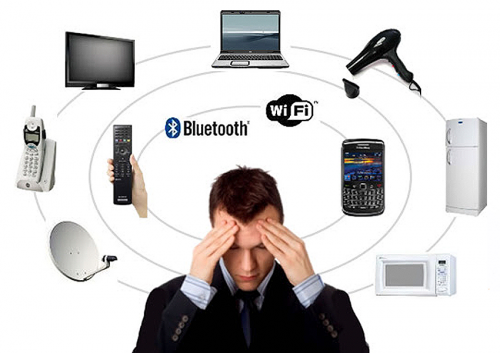
Electrohypersensitivity

I want to share with you this article based on information provided by EFEIA, which explains in detail what electrohypersensitivity (EHS) is.

This health problem, increasingly common worldwide, remains difficult for most healthcare workers to understand. It is essential to shed light on this condition in order to improve understanding and support for people with the condition.

Electrohypersensitivity: a look at electromagnetic field sensitivity

Electrohypersensitivity (EHS), also known as electromagnetic hypersensitivity, is an increasingly recognised condition affecting people who experience sensitivity or allergy to electromagnetic fields (EMF). This sensitivity manifests itself through a variety of symptoms, from mild to extremely severe, which can worsen pre-existing health conditions.

environmental

What is electrohypersensitivity?

Electrohypersensitivity is a condition in which individuals exhibit adverse reactions to electromagnetic fields, even at levels well below the maximum permitted by international radiation safety standards. EHS sufferers report a range of health problems that they attribute to EMF exposure. These symptoms can be so debilitating that some people are forced to radically change their lifestyle, avoiding EMFs as much as possible and even stopping work.

Common symptoms

Symptoms of EHS vary considerably between individuals, but the most common include:

  • Dermatological: Redness, tingling and burning sensation of the skin.
  • Neurological: Headaches, dizziness, nausea, difficulty concentrating, memory loss, irritability, depression, anxiety, insomnia, fatigue, tremors and muscle spasms.
  • Cardiac: palpitations, arrhythmias, chest pain or pressure and fluctuating blood pressure.
  • Hearing: squeaking, buzzing or hearing loss.
  • Respiratory: Sinusitis, bronchitis, pneumonia and asthma.
  • Ophthalmological: Pain or burning in the eyes, deterioration of vision and cataracts.
  • Other: Digestive problems, abdominal pain, sexual dysfunction, dry mouth and eyes, and nosebleeds.

Electrohypersensitivity

Recognition and protection

In some countries, EHS has been recognised as a functional impairment. A notable example is Sweden, where this condition is considered a functional disability, giving those affected maximum legal protection and financial support. This protection includes free accessibility measures, government subsidies and the possibility of forming disability organisations.

Bhital. International resolutions

Initiatives and studies

The World Health Organisation (WHO) has taken steps to understand and address EHS. In October 2004, it organised a seminar in Prague together with the National Reference Laboratory for Non-Ionising Radiation and the Ministry of Health of the Czech Republic. This event brought together experts to review the current state of knowledge on EHS and provide useful information for those affected.

In addition, EFEIA is actively working on data collection through a Global EHS Census. This effort aims to shed light on the prevalence and effects of EHS, as well as to find practical solutions for those affected.

The role of Dr. Olle Johansson

One of the leading advocates for the recognition of EHS is Dr. Olle Johansson, a world leading authority in the field of EMF radiation and its health effects. Dr Johansson coined the term «screen dermatitis» and has been instrumental in the recognition of EHS as a functional disorder. Their work has been crucial in getting electrohypersensitive people the recognition and protection they need.

Conclusion

Electrohypersensitivity is a real and debilitating condition for many people around the world. Although more research is still needed to fully understand its mechanisms and effects, recognition and protection of those affected are crucial steps towards a more inclusive and equitable society. It is essential that health institutions, governments and communities work together to provide the necessary support and improve the quality of life of those suffering from this condition.

If you are a person with EHS and need help, you can ask for a free counselling appointment with me on WhatsApp 669 979 939.


Scientific articles on electrohypersensitivity

World Health Organisation (WHO)

  • Electromagnetic fields and public health: Electromagnetic Hypersensitivity. WHO Factsheet 296, 2005.

Studies and systematic reviews

  • Rubin, James; Das Munshi, J.; Wessely, Simon (Marzo-Abril 2005). «Electromagnetic hypersensitivity: a systematic review of provocation studies». Psychosomatic Medicine, 67(2), pp. 224-232. doi:10.1097/01.psy.0000155664.13300.64. PMID 15784787.
  • Röösli, M. (Junio 2008). «Radiofrequency electromagnetic field exposure and non-specific symptoms of ill health: a systematic review». Environmental Research, 107(2), pp. 277-287. doi:10.1016/j.envres.2008.02.003. PMID 18359015.

International conferences and workshops

  • Electromagnetic Hypersensitivity Proceedings. International Workshop on EMF Hypersensitivity, Praga, República Checa, Octubre 25-27, 2004.

Surveys and population-based studies

  • Roosli, Martin; Moser, M.; Baldinini, Y.; Meier, M.; Braun-Fahrlander, C. (Febrero 2004). «Symptoms of ill health ascribed to electromagnetic field exposure – a questionnaire survey». International Journal of Hygiene and Environmental Health, 207(2), pp. 141-150. doi:10.1078/1438-4639-00269. PMID 15031956.
  • Hillert, L.; Berglind, N.; Arnetz, BB; Bellander, T. (Febrero 2002). «Prevalence of self-reported hypersensitivity to electric or magnetic fields in a population-based questionnaire survey». Scandinavian Journal of Work, Environment & Health, 28(1), pp. 33-41. PMID 11871850.

Reviews and reports

  • Irvine, N. (2005). «Definition, epidemiology and management of electrical sensitivity». Report for the Radiation Protection Division of the UK Health Protection Agency, HPA-RPD-010.
  • Levitt, B. Blake. (1995). Electromagnetic Fields. San Diego: Harcourt Brace & Company. pp. 181-218.

Studies on symptoms and health

  • Carlsson, F.; Karlson, B.; Orbaek, P.; Osterberg, K.; Ostergren, PO. (Julio 2005). «Prevalence of annoyance attributed to electrical equipment and smells in a Swedish population, and relationship with subjective health and daily functioning». Public Health, 119(7), pp. 568-577. doi:10.1016/j.puhe.2004.07.011. PMID 15925670.
  • Real, William; Pan, Yagn; Yenyves, Ervin; Sujisawa, Iehiko; Suyama, Hideo; Samadi, Nasrola; Ross, Gerald. (1991). «Electromagnetic field sensitivity». Journal of Bioelectricity, 10, pp. 241-256.

Neurophysiology and electrical sensitivity

  • Lyskov, E.; Sandström, M.; Hansson Mild, K. (Noviembre 2001). «Neurophysiological study of patients with perceived ‘electrical hypersensitivity'». International Journal of Psychophysiology, 42(3), pp. 233-241. doi:10.1016/S0167-8760(01)00141-6. PMID 11812390.
  • Landgrebe, M.; Hauser, S.; Langguth, B.; Frick, U.; Hajak, G.; Eichhammer, P. (Marzo 2007). «Altered cortical excitability in subjectively electrosensitive patients: results of a pilot study». Journal of Psychosomatic Research, 62(3), pp. 283-288. doi:10.1016/j.jpsychores.2006.11.007. PMID 17324677.
  • Sandström, M.; Lyskov, E.; Berglund, A.; Medvedev, S.; Mild, KH. (Enero 1997). «Neurophysiological effects of flickering light in patients with perceived electrical hypersensitivity». Journal of Occupational and Environmental Medicine, 39(1), pp. 15-22. doi:10.1097/00043764-199701000-00006. PMID 9029427.

Studies on mobile telephony and EMF exposure

  • Eltiti, S.; Wallace, D.; Ridgewell, A.; et al. (November 2007). «Does Short-Term Exposure to Mobile Phone Base Station Signals Increase Symptoms in Individuals Who Report Sensitivity to Electromagnetic Fields? A Double-Blind Randomized Provocation Study». Environmental Health Perspectives, 115(11), pp. 1603-1608. doi:10.1289/ehp.10286. PMID 18007992.
  • Regel, Sabine; Negovetic, Sonja; Roosli, Martin; Berdinas, Veronica; Schuderer, Jurgen; Huss, Anke; Lott, Urs; Kuster, Niels; Achermann, Peter. (August 2006). «UMTS Base Station-like Exposure, Well-Being, and Cognitive Performance». Environmental Health Perspectives, 114(8), pp. 1270-1275. doi:10.1289/ehp.8934. PMID 16882538. PMC 1552030.
  • Rubin, James; Hahn, G.; Everitt, BS; Clear, AJ; Wessely, Simon. (2006). «Are some people sensitive to mobile phone signals? Within participants double blind randomised provocation study». British Medical Journal, 332(7546), pp. 886-889. doi:10.1136/bmj.38765.519850.55. PMID 16520326. PMC 1440612.
  • Wilen, J.; Johansson, A.; Kalezic, N.; Lyskov, E.; Sandstrom, M. (Abril 2006). «Psychophysiological tests and provocation of subjects with mobile phone related symptoms». Bioelectromagnetics, 27(3), pp. 204-214. doi:10.1002/bem.20195. PMID 16304699.

Additional support and resources

Other relevant studies

  • Schreier, N.; Huss, A.; Röösli, M. (2006). «The prevalence of symptoms attributed to electromagnetic field exposure: a cross-sectional representative survey in Switzerland». Sozial- und Präventivmedizin, 51(4), pp. 202-209. doi:10.1007/s00038-006-5061-2. PMID 17193782.
  • Eltiti, S.; Wallace, D.; Zougkou, K.; et al. (Febrero 2007). «Development and evaluation of the electromagnetic hypersensitivity questionnaire». Bioelectromagnetics, 28(2), pp. 137-151. doi:10.1002/bem.20279. PMID 17013888.
  • Bergqvist, U.; Vogel, E.; Aringer, L.; Cunningham, J.; Gobba, F.; Leitgeb, N.; Miro, L.; Neubauer, G.; Ruppe, I.; Vecchia, P.; Wadman, C. (1997). «Possible health implications of subjective symptoms and electromagnetic fields. A report prepared by a European group of experts for the European Commission, DG V.» Arbete och Halsa, 19.


PRACTICES FOR LIVING IN A HEALTHY ENVIRONMENT

Conventional hygiene products may contain substances that are toxic to health.

What does radiation sound like?

Find out what the different radiations and signals we use every day in our home or work environment sound like – and how they sound.

ENDOCRINE DISRUPTORS, SILENT ENEMIES: HOW CAN WE DEFEND OURSELVES?

Find out what the different radiations and signals we use every day in our home or work environment sound like – and how they sound.